
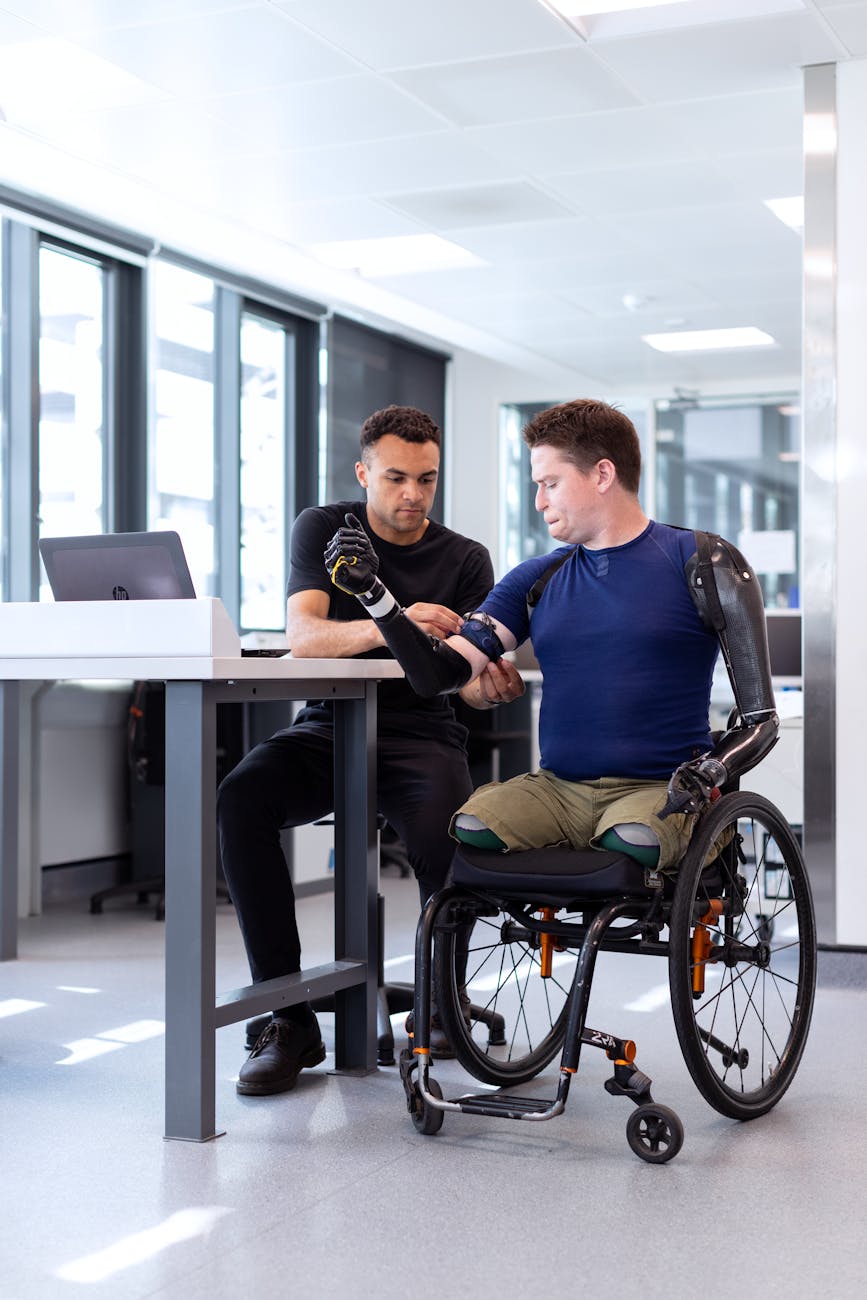
The question is no longer whether humans can enhance themselves.
It’s whether we should—and under what rules.
From gene editing and neural implants to AI-augmented cognition and bioengineered longevity, human enhancement technologies are accelerating. What once belonged to speculative fiction now occupies boardrooms, biotech labs, and policy debates.
Yet innovation without ethical structure rarely ends well.
As enhancement technologies move from therapy to augmentation, ethical frameworks must evolve just as quickly. Because when we modify human capability itself, the stakes extend far beyond product cycles.
They reshape society.
What Counts as Human Enhancement?
Human enhancement refers to technologies designed not merely to treat illness, but to improve physical, cognitive, or biological capacities beyond typical baselines.
This includes:
- Gene editing using CRISPR
- Brain-computer interfaces
- Neural implants
- Cognitive-enhancing pharmaceuticals
- Bioengineered longevity treatments
- AI-assisted decision augmentation
Companies like Neuralink are developing implantable brain interfaces aimed at restoring function, yet the same technology could eventually enhance cognition.
Similarly, CRISPR-based advances pioneered by researchers such as Jennifer Doudna demonstrate the power to edit DNA with precision.
Initially, these tools focus on treating disease.
However, enhancement often follows therapy.
And that’s where ethical frameworks become critical.
Therapy vs. Enhancement: The First Ethical Line
Most societies broadly support therapeutic interventions—correcting genetic disorders, restoring lost mobility, or treating neurodegenerative disease.
However, enhancement shifts the objective.
Instead of restoring health, it aims to amplify capability.
For example:
- Editing genes to prevent inherited disease gains wide acceptance.
- Editing genes to increase intelligence raises profound ethical concerns.
The difference may appear subtle—but it carries enormous implications.
Therapy seeks equity.
Enhancement risks inequality.
The Inequality Question
Perhaps the most pressing ethical concern is access.
If enhancement technologies remain expensive, they may create biologically advantaged classes. Wealth could translate into cognitive, physical, or lifespan advantages.
Imagine a world where:
- Enhanced individuals process information faster
- Augmented memory improves academic outcomes
- Longevity treatments extend productive lifespan
Without equitable frameworks, enhancement could amplify social divides.
Institutions like the World Health Organisation increasingly emphasise global equity in emerging medical technologies.
However, enforcement remains complex.
Consent in a Rapidly Evolving Landscape
Another critical issue is informed consent.
When technologies alter neural pathways or genetic structures, individuals must fully understand the long-term implications.
Yet enhancement technologies often evolve faster than longitudinal data can accumulate.
Consider germline editing—altering genes in ways that affect future generations.
The National Academies of Sciences, Engineering, and Medicine has recommended cautious, tightly regulated pathways for germline interventions.
However, the ethical dilemma remains:
Can one generation ethically decide biological changes for the next?
Regulatory Frameworks: A Global Patchwork
Ethical oversight varies widely across regions.
The European Union maintains stricter regulatory positions on genetic modification compared to some jurisdictions.
Meanwhile, debates in the United States continue to balance innovation incentives with bioethical safeguards.
This patchwork approach creates a risk of “enhancement tourism,” where individuals seek procedures in less regulated environments.
Therefore, international coordination becomes increasingly important.
The Role of AI in Human Enhancement
Artificial intelligence now intersects directly with human augmentation.
AI-driven neural interfaces analyse brain signals. Machine learning models optimise stimulation patterns. Cognitive-assistance systems support real-time decision-making.
As discussed in How Humans Will Interact With Machines Next, the boundary between human and machine is softening.
However, AI-driven enhancement introduces new ethical layers:
- Who owns neural data?
- Can cognitive augmentation be monetised?
- Should enhanced performance be disclosed in competitive environments?
Ethical frameworks must account for both biological and algorithmic integration.
The Identity Question: What Does It Mean to Be Human?
Enhancement debates often drift into philosophy.
If cognitive implants increase memory retention, does that alter identity?
If genetic edits reduce emotional volatility, does personality shift?
Enhancement is not merely functional—it can be existential.
Bioethicists argue that human dignity depends partly on unaltered autonomy. Others contend that enhancement aligns with humanity’s long history of self-improvement—from literacy to vaccination.
The distinction may lie in degree rather than kind.
Yet degree matters.
Military and Competitive Use
Enhancement technologies raise particularly sensitive concerns in defence and elite performance environments.
If soldiers receive neural augmentation to enhance reaction speed, does that redefine combat ethics?
If athletes integrate performance-enhancing implants, how do regulatory bodies respond?
Unlike traditional performance-enhancing drugs, implants may be permanent and integrated into biological systems.
Thus, ethical governance must extend beyond healthcare into sports, the military, and corporate sectors.
Data Privacy and Biological Sovereignty
Human enhancement often requires continuous monitoring.
Neural implants transmit signals. Genetic therapies generate long-term biological data.
As explored in Why Data Privacy Is Becoming a Global Concern, data governance frameworks struggle to keep pace with digital expansion.
When biological data becomes cloud-connected, privacy becomes inseparable from bodily autonomy.
In this context, ethical frameworks must incorporate:
- Data ownership clarity
- Encryption standards
- Transparent usage policies
- Explicit consent protocols
Because biological data cannot be reset like a password.
Case Study: Neural Interface Trials
Clinical trials involving implantable neural interfaces have demonstrated the restoration of motor function in patients with paralysis.
The therapeutic benefits are undeniable.
However, researchers also emphasise ongoing monitoring of cognitive side effects, device security, and psychological adaptation.
The case underscores a broader principle:
Technological feasibility does not absolve us of our ethical responsibility.
Rather, it intensifies it.
Toward a Coherent Ethical Framework
A sustainable ethical model for human enhancement should integrate four pillars:
1. Equity
Access must avoid deepening socioeconomic divides.
2. Transparency
Clear disclosure of risks, data usage, and long-term uncertainties.
3. Proportionality
Enhancement applications must balance benefit against societal impact.
4. Oversight
Independent regulatory and bioethical review at national and international levels.
Without these pillars, innovation risks outpacing social stability.
The Path Forward: Responsible Acceleration
Human enhancement is not inherently dystopian.
Vaccination enhances immunity. Glasses enhance vision. Education enhances cognition.
The difference now lies in biological depth and permanence.
Therefore, ethical frameworks should not suppress innovation—but guide it.
Forward-looking governance encourages responsible development while preventing reckless application.
Innovation With Boundaries
Human enhancement technologies will continue advancing.
Gene editing will become more precise. Neural interfaces will improve. AI-assisted cognition will expand.
The critical question is not whether these tools exist.
It is how society chooses to deploy them.
Ethical frameworks serve as guardrails—not barriers.
Because when humanity gains the power to rewrite its own capabilities, progress must walk alongside principle.
And in that balance lies the future of human potential. Read More

Latest from Our Blog
Discover a wealth of knowledge on software development, industry insights, and expert advice through our blog for an enriching experience.
-

Next-Gen Batteries and Energy Storage: The Technology Powering the Clean Energy Revolution
The global energy transition has a storage problem. Solar panels don’t produce electricity at night.…
-

AI in Climate Modelling and Mitigation: How Intelligent Systems Are Shaping Earth’s Future
Humanity’s climate challenge is vast and complex. Rising temperatures, changing weather patterns, biodiversity loss, and…
-

Clean Tech Investing in 2026: Where Capital Is Flowing and Why It Matters
Clean technology is no longer a cottage industry limited to niche sustainability funds or CSR…

Leave a Reply