
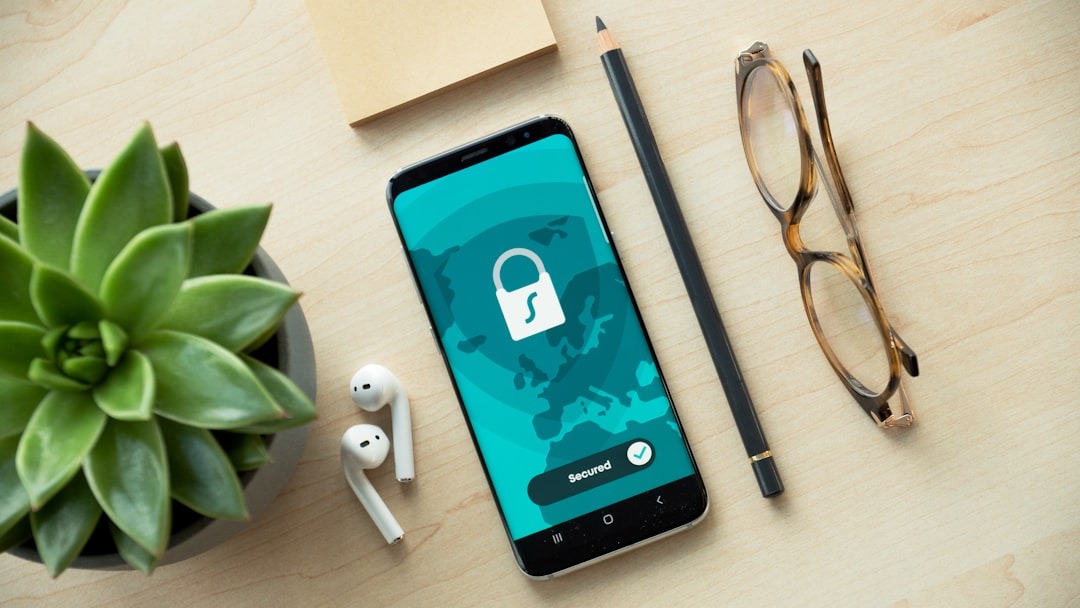
The Bargain Was Subtle — And That’s Why It Worked
At first, the exchange felt harmless.
A free app in return for a few permissions.
A smarter device in exchange for basic data.
A personalised experience for a little transparency.
Nothing dramatic. Nothing alarming.
Yet, over time, convenience became frictionless—and privacy quietly became negotiable. Not through a single decision, but through thousands of small, seemingly reasonable ones.
This is how the trade-off normalised.
Convenience Didn’t Just Improve Life — It Reshaped Expectations
Technology didn’t simply make things easier. It reset what “normal” feels like.
Waiting now feels inefficient.
Manual processes feel outdated.
Offline experiences feel incomplete.
As explored in Technology Is Changing How Humans Think and Behave on TechBroNews, repeated exposure to optimised systems trains the brain to expect immediacy, personalisation, and automation as defaults.
Once expectations shift, resistance weakens.
Privacy Erosion Rarely Feels Like Loss — Until It’s Gone
Privacy doesn’t usually disappear through force. It dissolves through comfort.
Location services save time.
Biometrics save effort.
Smart assistants save attention.
Each improvement removes friction. Each removal quietly expands data collection.
According to MIT Technology Review, modern platforms are designed to make data sharing feel invisible—embedded into flows users rarely question.
The result is not ignorance, but acquiescence.
The Illusion of Choice Is Central to the Trade-Off
Technically, consent still exists.
You can opt out.
You can adjust settings.
You can decline permissions.
In practice, those choices are often buried, fragmented, or framed as obstacles to functionality.
As Harvard Business Review notes, when declining data access degrades user experience, consent becomes conditional rather than free.
This isn’t accidental. It’s design.
Personalisation Is the Most Persuasive Argument of All
Nothing sells data collection better than relevance.
When platforms know preferences, habits, locations, and patterns, experiences feel tailored rather than intrusive.
Music fits moods.
Ads feel intuitive.
Recommendations feel helpful.
Yet personalisation requires surveillance.
And over time, the same systems that predict preferences begin shaping them—narrowing exposure, reinforcing bias, and guiding behaviour.
This feedback loop is examined closely in Social Media Is Reshaping Public Opinion on TechBroNews, where convenience-driven algorithms increasingly influence belief formation.
Smart Devices Turn Private Spaces into Data Zones
Nowhere is the trade-off more intimate than inside the home.
Smart TVs listen.
Wearables track bodies.
Voice assistants process conversations.
These devices promise comfort and efficiency, yet they also extend data collection into spaces once considered personal sanctuaries.
As highlighted by research from Mozilla Foundation, many smart products collect far more data than necessary, and retain it longer than expected.
The concern isn’t paranoia. It’s proportionality.
Security Risks Rise As Convenience Expands
The more data centralised systems hold, the more valuable—and vulnerable—they become.
Breaches no longer expose just emails. They reveal:
- Movement histories
- Health metrics
- Financial behavior
- Personal networks
As discussed in Digital Skills Are Becoming Essential for Everyone on TechBroNews, privacy awareness is now a core digital competency—not a technical niche.
Understanding risk has become as important as enjoying ease.
Governments and Corporations Are Redefining Privacy Norms
Legal frameworks are attempting to catch up.
Regulations like GDPR and emerging AI governance models signal growing concern. Yet enforcement struggles to match the technological pace.
Meanwhile, corporations continue shaping norms through defaults, not debates.
What users accept today becomes tomorrow’s baseline.
As the World Economic Forum observes, privacy is shifting from a right people actively protect to a condition systems occasionally permit.
Still, Convenience and Privacy Are Not Natural Enemies
This is the most misunderstood part of the conversation.
The trade-off isn’t inevitable.
Privacy-respecting design exists:
- Local data processing
- Minimal data retention
- Transparent permissions
- User-controlled personalisation
The challenge lies not in technical feasibility, but in incentive structures.
Convenience maximises engagement.
Engagement maximises data.
Data maximises profit.
Until incentives change, frictionless systems will continue to favour surveillance.
The Human Cost Is Gradual — And That’s the Danger
Loss of privacy doesn’t announce itself dramatically.
It shows up as:
- Self-censorship
- Normalized monitoring
- Reduced experimentation
- Behavioral conformity
Over time, people adjust their behaviour simply because they might be observed.
As Stanford’s Human-Centred AI Institute notes, perceived surveillance alone can alter creativity and risk-taking—even without active enforcement.
Reclaiming Balance Requires Conscious Friction
Ironically, protecting privacy often means reintroducing friction.
Slower onboarding.
Manual settings.
Intentional choices.
While inconvenient, these pauses restore agency.
They remind users that convenience is not neutral—and that trade-offs deserve awareness.
Final Thought: Convenience Is Temporary — Data Is Permanent
Here’s the truth most platforms won’t emphasise:
Convenience fades.
Habits change.
Products evolve.
Data, once collected, persists.
The real question isn’t whether convenience is worth privacy.
It’s whether we should be making that decision automatically—or deliberately.
Because the future won’t be shaped by how advanced our technology becomes, but by how consciously we agree to live with it.


Unleash Innovation with Digital Insights
Explore our blog for the latest trends and insights in software development, designed to inspire innovation and drive business success.
-
Remote-First Companies Are Scaling Faster Than Ever
It started as a necessity. Zoom calls replaced office meetings. Slack channels replaced watercooler chats. Laptops became the new headquarters. What…
-

What Successful Startup Founders Do Differently
It starts with a pattern few outsiders notice. Late nights in co-working spaces. Early-morning calls across time zones. Relentless prioritisation of…
-

Entrepreneurship in Tech Is Entering a New Era
It begins with an idea scribbled on a napkin. Then it becomes a prototype coded in a dorm room or coworking…
-

The Cybersecurity Mistakes Too Many People Still Make
In early December, a senior analyst at a midsize tech firm found himself staring at a string of logins that didn’t…
-

Governments Are Expanding Digital Surveillance — And the Line Between Security and Control Is Blurring
It began with cameras in public squares and license-plate readers at city checkpoints. Then it moved to real-time video analytics and…
-

Convenience vs Privacy: The Trade-Off We’re All Making — Often Without Realizing It
The Bargain Was Subtle — And That’s Why It Worked At first, the exchange felt harmless. A free app in return…
-

Technology Is Changing How Humans Think and Behave — Faster Than We Realize
This Is No Longer a Question of Influence — It’s a Question of Transformation At one point, technology simply supported human…
-

Digital Skills Are Becoming Essential for Everyone — Not Just Tech Workers
The Digital Divide Is No Longer About Access — It’s About Capability For years, conversations about technology focused on access: devices,…
-

Remote Work Technology Is Still Evolving
The Remote Work Experiment Is Over — The Evolution Has Begun For a moment, it seemed like remote work had “arrived.”…
Leave a Reply