
Category: Business
-

Nigeria’s fintech industry is facing another difficult test of transparency, legal compliance and customer protection after KudiWave Technologies Limited questioned the transfer of ₦750.37 million from its PalmPay account during an ongoing court dispute. The controversy centres on ₦750,369,439.04, which KudiWave says was removed from its PalmPay settlement account on July 15, 2026, under the…
-

Nvidia’s AI Machine Is Getting Bigger — Much Bigger Nvidia has already become one of the biggest winners of the artificial intelligence revolution. Now, some of the most aggressive forecasts surrounding the chipmaker suggest that its profits could reach extraordinary levels by 2029 as spending on AI infrastructure continues to accelerate. One headline-making projection puts…
-

Apple has officially entered a new leadership era. On September 1, 2026, John Ternus became Apple’s new CEO, succeeding Tim Cook after 15 years at the helm of one of the world’s most valuable technology companies. Cook is not leaving Apple entirely. Instead, he has moved into the role of executive chairman of Apple’s board,…
-

Cloud security mistakes are becoming harder to excuse. Businesses have moved huge amounts of data, applications and infrastructure into the cloud. Yet many organizations still approach cloud security as if they were protecting a traditional data center. That is a problem. Cloud environments change constantly. New users are added. Applications are deployed. APIs are connected.…
-

Stablecoins are challenging traditional banking in ways that would have seemed unlikely just a few years ago. What began as a tool for cryptocurrency traders has evolved into a fast-growing payment network attracting banks, fintech firms, multinational companies, and policymakers. Money now moves across borders in seconds instead of days. Businesses are settling international invoices…
-
The idea of a circular economy has moved from boardroom presentations to operational reality. By 2026, businesses worldwide are realizing that linear models — take, make, dispose — are unsustainable. The key driver? IoT technology, turning everyday objects into data-rich assets that inform reuse, recycling, and regeneration. Smart sensors, connected devices, and AI-driven analytics are…
-
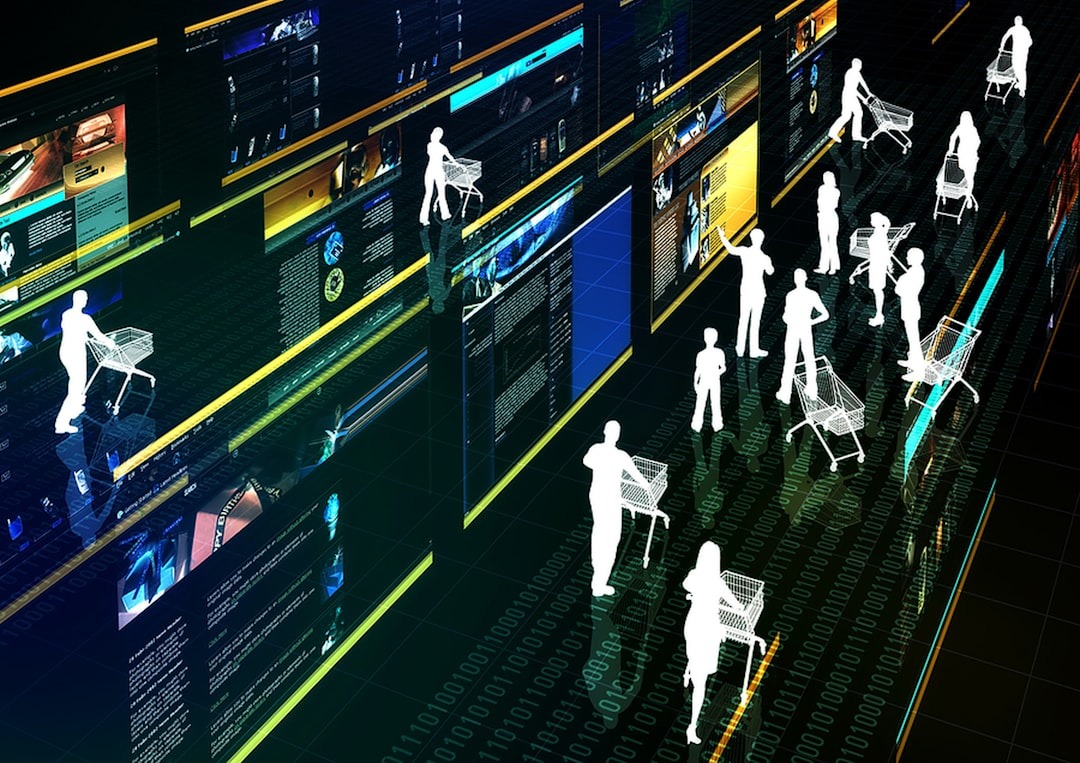
In 2025, digital transformation stopped being a corporate buzzword and became a measurable survival strategy. Across industries, organisations discovered that adopting technology alone was not enough. Instead, success depended on how deeply digital systems reshaped operations, decision-making, and customer engagement. As businesses move further into an AI-driven economy, the lessons learned from 2025 are now…
-

For decades, cybersecurity operated on a simple assumption: if you’re inside the network, you can be trusted. That assumption no longer holds. Cloud computing dissolved network perimeters. Remote work shattered office boundaries. SaaS platforms scatter data across vendors. Meanwhile, attackers stopped knocking on the front door and began exploiting credentials, APIs, and software supply chains.…
-

In the past, software security was someone else’s problem. IT teams managed firewalls, patched servers, and monitored intrusion logs. Developers focused on features, deadlines, and functionality. Today, that separation has all but vanished. Cyberattacks are faster, more sophisticated, and more destructive than ever. From ransomware to supply chain compromises, vulnerabilities in code can cascade globally.…
-

Software updates no longer arrive as occasional patches. Today, they reshape devices, enforce rules, and even redefine ownership—often without explicit user consent. From phones and cars to enterprise platforms, updates quietly dictate how technology behaves, evolves, and persists. They are no longer just improvements—they are a strategic lever for companies, a security lifeline for consumers,…