
Category: Automation
-

For years, cloud migration sounded like an IT modernisation project reserved for large enterprises. Then reality intervened. Remote work expanded overnight, digital services scaled unpredictably, and customer expectations shifted permanently. Today, cloud migration is no longer optional — it defines how competitive, resilient, and innovative a business can become. However, many organisations still misunderstand what…
-

In 2025, digital transformation stopped being a corporate buzzword and became a measurable survival strategy. Across industries, organisations discovered that adopting technology alone was not enough. Instead, success depended on how deeply digital systems reshaped operations, decision-making, and customer engagement. As businesses move further into an AI-driven economy, the lessons learned from 2025 are now…
-

Artificial intelligence promised objectivity. Instead, it inherited our blind spots. Across industries—from healthcare and hiring to finance and criminal justice—predictive systems shape who gets loans, who receives medical care faster, and even who gets flagged as a risk. Yet despite advances in machine learning, AI bias and algorithmic fairness remain stubborn, systemic challenges. The uncomfortable…
-

For decades, space exploration moved at a deliberate pace. Launches were rare. Missions were state-controlled. Budgets were immense. Progress was steady—but slow. Today, however, space technology is advancing faster than almost anyone predicted. Reusable rockets land autonomously. Private companies deploy thousands of satellites annually. AI navigates spacecraft millions of miles from Earth. Human missions to…
-

For most of modern history, biology and technology evolved along parallel tracks. Biology focuses on cells, organisms, and ecosystems. Technology centred on silicon, software, and systems. One studied life. The other engineered machines. Today, however, those boundaries are dissolving. Biotechnology and digital technology are rapidly merging—creating programmable biology, AI-driven drug discovery, bioengineered materials, and data-powered…
-
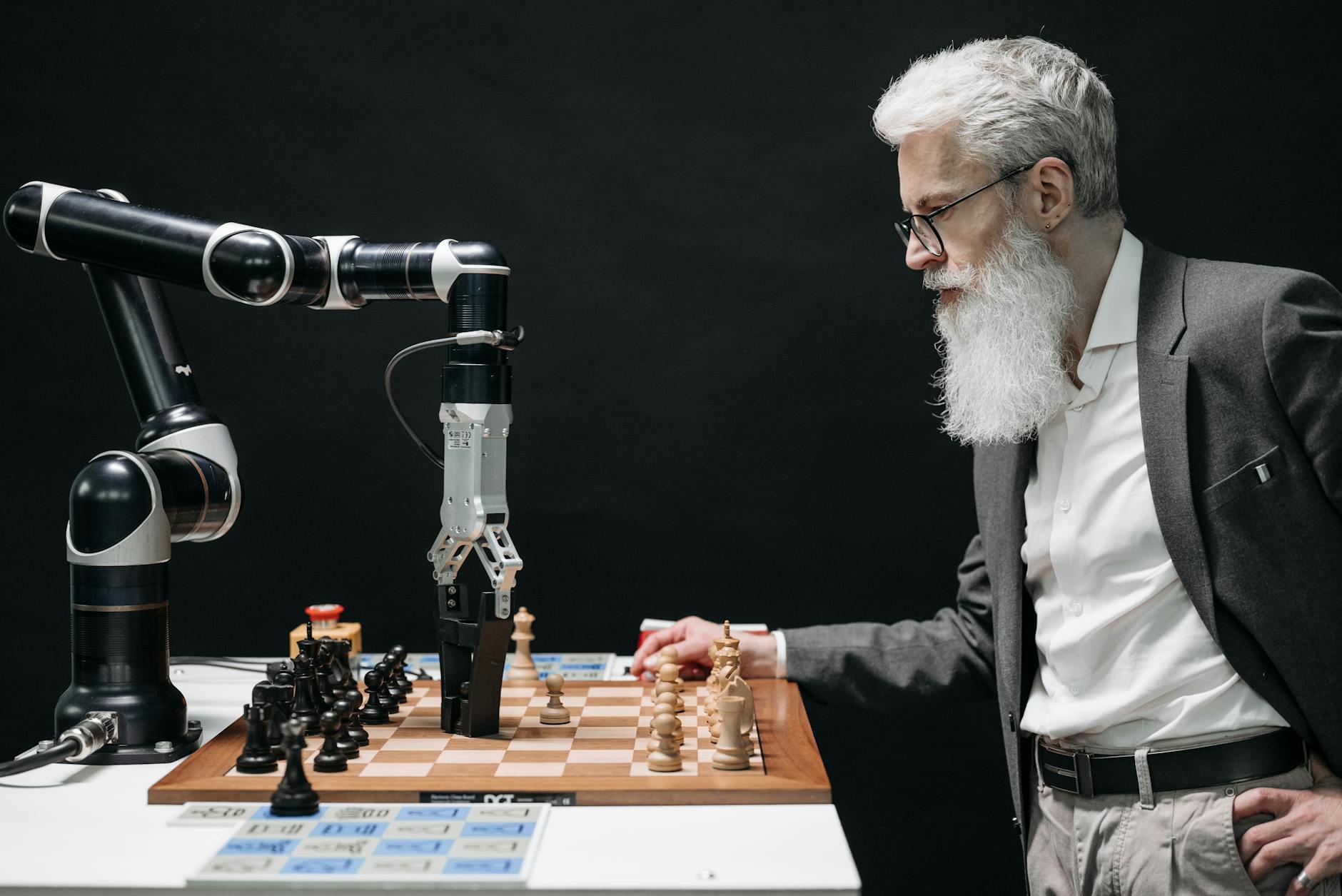
For decades, humans adapted to machines. We learned programming languages. We memorised keyboard shortcuts. We navigated rigid interfaces designed around hardware limitations. Now, however, the balance is shifting. Machines are adapting to us. The future of human-machine interaction (HMI) will not revolve solely around keyboards, touchscreens, or even smartphones. Instead, it will be shaped by…
-

Cybersecurity has always been a race between attackers and defenders. Historically, humans designed defences and responded to breaches manually. Today, artificial intelligence is tilting that balance. AI isn’t just a defensive tool—it’s becoming a force multiplier for cybersecurity teams, capable of detecting anomalies, predicting threats, and responding faster than any human could. At the same…
-

For decades, cybersecurity operated on a simple assumption: if you’re inside the network, you can be trusted. That assumption no longer holds. Cloud computing dissolved network perimeters. Remote work shattered office boundaries. SaaS platforms scatter data across vendors. Meanwhile, attackers stopped knocking on the front door and began exploiting credentials, APIs, and software supply chains.…
-

In the early days of mobile apps, developers faced a painful choice: build for iOS or Android—and often start from scratch for each platform. This approach was slow, expensive, and had fragmented user experiences. Today, that paradigm is collapsing. Cross-platform development frameworks like Flutter, React Native, and Xamarin are transforming how software is built, deployed,…
-

In 2010, scaling a web application often meant one thing: buy a bigger server. Today, that idea sounds almost quaint. Modern scalable software architecture no longer revolves around hardware upgrades alone. Instead, it relies on distributed systems, cloud-native design, API-first thinking, and continuous delivery pipelines that evolve in real time. In other words, scalability is…