
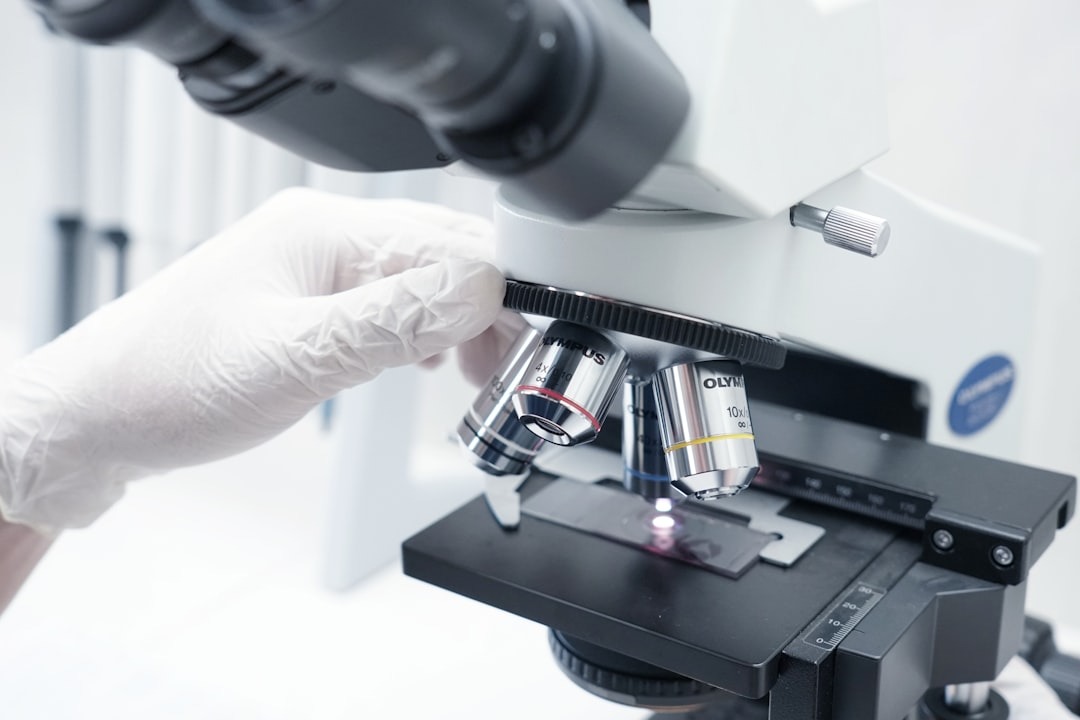
For most of modern history, biology and technology evolved along parallel tracks.
Biology focuses on cells, organisms, and ecosystems. Technology centred on silicon, software, and systems. One studied life. The other engineered machines.
Today, however, those boundaries are dissolving.
Biotechnology and digital technology are rapidly merging—creating programmable biology, AI-driven drug discovery, bioengineered materials, and data-powered healthcare systems. What once required decades of laboratory research can now be accelerated by machine learning models running in cloud environments.
This convergence is not incremental. It is structural.
And it may define the next era of innovation.
The Convergence: Where Code Meets Cells
At its core, the merger of biotechnology and technology is about digitisation.
DNA is increasingly treated like code. Cells are engineered like circuits. Biological processes are simulated in software before being tested in labs.
Institutions such as Broad Institute and MIT are pioneering research at the intersection of genomics, computational biology, and AI.
Meanwhile, advances in cloud computing—explored in Cloud Computing Became Essential Almost Overnight —have made it possible to process massive genomic datasets at scale.
The result? Biology is becoming programmable.
AI-Powered Drug Discovery
One of the most transformative examples of biotech-tech convergence is AI-driven drug discovery.
Traditionally, pharmaceutical development required:
- Years of molecular screening
- Billions of dollars in R&D
- Extensive trial-and-error experimentation
Today, companies like DeepMind have developed AlphaFold, a system capable of predicting protein structures with unprecedented accuracy. Protein folding—once a decades-old biological mystery—can now be computationally modelled in hours.
Similarly, biotech firms like Moderna use digital platforms to design mRNA therapies rapidly, demonstrating how computational biology can accelerate vaccine and therapeutic development.
Consequently, the drug development pipeline is shifting from laboratory-first to algorithm-first.
CRISPR and Gene Editing: Engineering Life
Another pillar of biotech-tech integration is gene editing.
The CRISPR-Cas9 system enables precise modification of DNA sequences, opening possibilities for:
- Treating genetic disorders
- Enhancing crop resilience
- Engineering disease-resistant organisms
Companies such as CRISPR Therapeutics are translating gene-editing breakthroughs into clinical treatments.
However, what makes this development uniquely technological is its reliance on computational modelling, data analytics, and increasingly AI-assisted gene targeting.
As software frameworks evolve—discussed in Modern Frameworks Are Changing How Software Is Built—biological engineering similarly benefits from modular, programmable approaches.
Cells, in many ways, are becoming platforms.
Bioinformatics: The Data Revolution in Biology
The explosion of genomic data has made bioinformatics indispensable.
Sequencing technologies produce terabytes of information. Interpreting that data requires:
- Machine learning algorithms
- Distributed computing systems
- Advanced visualisation tools
Organisations like the National Institutes of Health support large-scale genomic research initiatives that depend heavily on computational infrastructure.
This data-driven transformation aligns with trends outlined in Why Data Privacy Is Becoming a Global Concern. Genetic data is deeply personal, permanent, and sensitive.
Thus, the merger of biotechnology and technology also raises urgent ethical questions.
Synthetic Biology: Building With Living Systems
Synthetic biology takes the convergence further by designing entirely new biological systems.
Instead of merely editing genes, researchers engineer organisms to:
- Produce biofuels
- Manufacture sustainable materials
- Detect environmental toxins
Companies like Ginkgo Bioworks design custom microbes for industrial and pharmaceutical applications.
In essence, biology becomes a manufacturing platform—comparable to cloud infrastructure or programmable APIs, as discussed in [APIs Are the Invisible Glue of the Internet](/apis-invisible-glue).
The difference? The “infrastructure” is alive.
Wearable Tech and Digital Health
Beyond laboratories, biotechnology and technology converge in consumer-facing innovations.
Wearables and biosensors now monitor:
- Heart rate variability
- Blood oxygen levels
- Sleep patterns
- Glucose levels
Companies like Apple and Dexcom are integrating biometric monitoring into everyday devices.
As AI becomes embedded into healthcare diagnostics—explored in AI Is Becoming a Powerful Cybersecurity Weapon—predictive models may soon detect diseases before symptoms manifest.
Healthcare, therefore, shifts from reactive treatment to proactive prevention.
Ethical and Regulatory Crossroads
However, rapid convergence introduces complex ethical challenges:
- Who owns genetic data?
- How secure are bioinformatics databases?
- Could engineered organisms disrupt ecosystems?
- What safeguards prevent genetic inequality?
Regulatory agencies and global policymakers must address these issues proactively.
Just as cybersecurity frameworks evolved alongside digital infrastructure, biotech governance must mature in parallel with biological innovation.
Economic and Industrial Impact
The merger of biotechnology and technology has enormous economic implications:
- Faster drug development reduces healthcare costs
- Bioengineered materials enable sustainable manufacturing
- Precision agriculture increases food security
- Personalised medicine improves patient outcomes
Investors increasingly view biotech not as a niche scientific sector, but as a technology-driven growth market.
In fact, the convergence mirrors earlier digital transformations—similar to how software reshaped finance, retail, and manufacturing.
The Future: Programmable Life
Ultimately, biotechnology and technology are merging around a simple idea:
Life is information.
When DNA becomes code, cells become programmable, and biology becomes computable, innovation accelerates dramatically.
The implications stretch across healthcare, agriculture, energy, sustainability, and even space exploration.
However, with great power comes profound responsibility.
The future will not merely depend on what we can engineer—but on how wisely we choose to engineer it. Read More

Latest from Our Blog
Discover a wealth of knowledge on software development, industry insights, and expert advice through our blog for an enriching experience.
-

Next-Gen Batteries and Energy Storage: The Technology Powering the Clean Energy Revolution
The global energy transition has a storage problem. Solar panels don’t produce electricity at night. Wind turbines don’t spin on command. Meanwhile, electric vehicles demand longer range, faster charging, and safer battery…
-

AI in Climate Modelling and Mitigation: How Intelligent Systems Are Shaping Earth’s Future
Humanity’s climate challenge is vast and complex. Rising temperatures, changing weather patterns, biodiversity loss, and carbon emissions don’t follow tidy equations. Traditional models struggle to deliver reliable forecasts at the scale policymakers…
-

Clean Tech Investing in 2026: Where Capital Is Flowing and Why It Matters
Clean technology is no longer a cottage industry limited to niche sustainability funds or CSR budgets. By 2026, clean tech will have become one of the most significant — and fastest-growing —…

Leave a Reply