
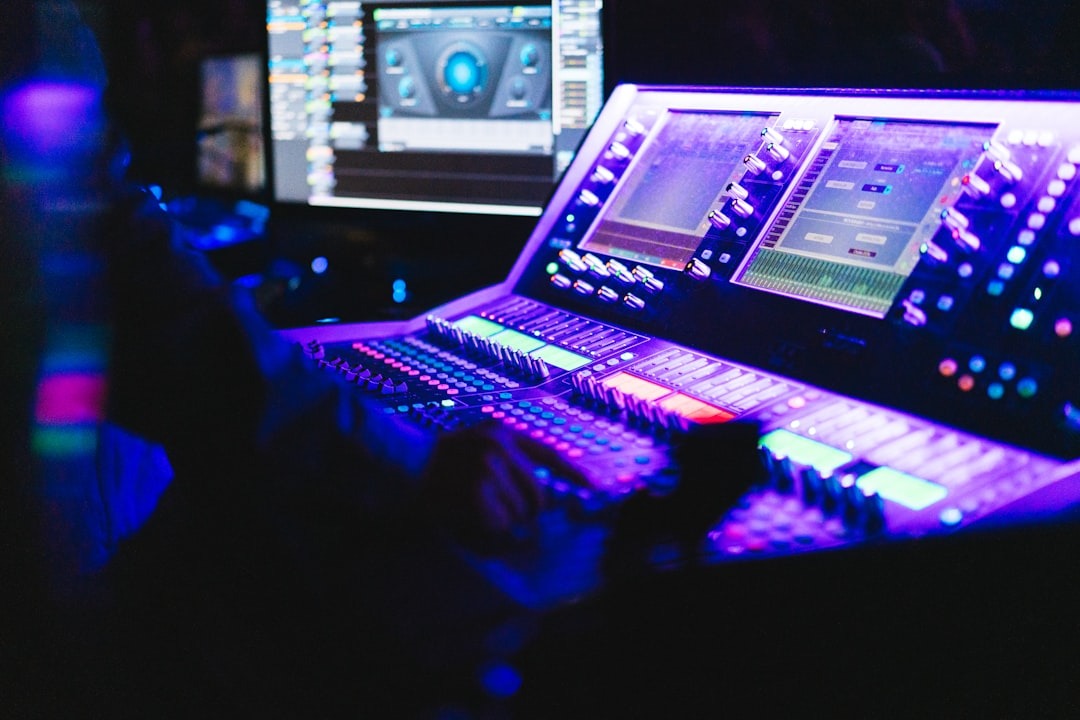
For most of the past century, music production had a physical address.
It lived in studios, controlled spaces filled with expensive hardware, acoustic treatments, and institutional gatekeepers. Access shaped sound. Budget-shaped ambition. Time shaped creativity.
That model didn’t collapse overnight. Instead, it quietly dissolved, line by line of code, plugin by plugin, update by update.
Today, the most influential music studios in the world fit inside laptops. And the consequences of that shift are still unfolding.
The Studio Didn’t Disappear — It Became Software
Modern music production begins inside digital audio workstations like Ableton Live, Logic Pro, and FL Studio, platforms that now function less like recording tools and more like creative ecosystems. What once required racks of analogue gear can now be simulated, automated, and endlessly modified through software instruments and plugins.
Companies like Native Instruments, iZotope, and Universal Audio have effectively virtualised entire generations of studio hardware, lowering barriers that once excluded independent artists from professional-quality production (WIRED).
As a result, production is no longer constrained by space or schedule. It’s constrained—if at all—by imagination and taste.
This mirrors a broader pattern explored in How Tech Startups Turn Ideas Into Real Products, where software replaces infrastructure and speed becomes the defining advantage.
AI Isn’t Replacing Producers — It’s Rewriting the Workflow
Artificial intelligence has entered music production quietly, without the spectacle that accompanied its arrival in other creative industries. Yet its impact is no less profound.
AI-powered tools now assist with:
- Vocal tuning and cleanup
- Automated mixing and mastering
- Melody and chord generation
- Style transfer and sound matching
Platforms like LANDR, Endel, and AIVA are not selling replacement creativity; they’re selling acceleration (The Verge). Producers can test ideas faster, iterate without friction, and explore sonic directions that once required hours of manual labour.
The creative decision still belongs to the human.
The machine simply removes resistance.
This tension echoes themes raised in Big Data Raises Bigger Ethical Questions, where efficiency collides with authorship and accountability.
Music Is Now a Global, Asynchronous Collaboration
Perhaps the most radical change isn’t technical—it’s cultural.
A song today can be produced across continents without anyone meeting in person. Beats are shared via cloud folders. Vocals arrive through messaging apps. Mixing notes appear as timestamps in shared sessions.
Platforms like Splice and SoundCloud have transformed collaboration into an always-on process, while online communities on Discord and Reddit function as decentralised music schools (MIT Technology Review).
Genre boundaries blur in this environment. Cultural influences stack. Sounds migrate faster than artists ever could.
Music production has become a networked activity—less solitary, more communal.
Democratisation Came With a Catch
Technology opened the gates. Everyone walked in.
Millions of tracks are now uploaded to streaming platforms each year, creating an unprecedented abundance of music—and an equally unprecedented problem of visibility. The tools that empower creators also saturate the ecosystem.
In this landscape, technical skill alone is insufficient. Producers must understand platforms, audiences, and algorithms. Discovery is no longer guaranteed by quality; it’s mediated by systems.
This dynamic closely parallels what we explored inTech Communities Are Driving Innovation Forward, where access expands faster than opportunity.
Music Is Being Shaped for Feeds, Not Rooms
Production choices today are influenced less by concert halls and more by smartphones.
Hooks arrive faster. Intros shrink. Dynamic range compresses. Songs are optimised for earbuds, background listening, and short-form video platforms like TikTok, which now acts as both a discovery engine and an informal A&R department (Rolling Stone).
Producers don’t receive instructions from platforms—but they do receive feedback. Skips matter. Replays matter. Virality leaves fingerprints on sound design.
Music production has become a conversation with invisible systems.
Ownership, Rights, and the New Producer Economy
As production tools evolve, questions of ownership grow louder.
Who owns a track shaped by AI assistance? How are royalties split when samples cross borders instantly? What happens when training data includes decades of recorded music?
These questions are no longer theoretical. Lawsuits, licensing disputes, and policy debates are already reshaping the industry (Billboard).
Producers today operate at the intersection of creativity, technology, and law—an increasingly complex position that mirrors the pressures discussed inConvenience vs Privacy: The Trade-Off We’re All Making.
What Creativity Looks Like Now
The romantic image of the producer as a solitary genius still exists—but it’s no longer dominant.
Today’s most effective producers are editors, curators, and systems thinkers. They know when to trust instinct and when to trust tools. They understand that restraint matters more than access.
Creativity hasn’t diminished.
It has become more deliberate.
The Future Is Already in Progress
Looking ahead, music production will continue to fragment and recombine. Live AI remixing, immersive spatial audio, and audience-responsive compositions are already appearing at the margins.
Songs will evolve after release. Versions will multiply. The idea of a “final mix” will feel increasingly outdated.
Music production is no longer a pipeline.
It’s a living process.
Final Thought
Technology didn’t make music less human. It made the systems around it more visible.
It revealed how much creativity depends on access, iteration, and community. It exposed the trade-offs between speed and depth, freedom and saturation.
In the end, music production today isn’t just about making sound.
It’s about navigating the structures that decide which sounds survive.

Latest from Our Blog
Discover a wealth of knowledge on software development, industry insights, and expert advice through our blog for an enriching experience.
-

Next-Gen Batteries and Energy Storage: The Technology Powering the Clean Energy Revolution
The global energy transition has a storage problem. Solar panels don’t produce electricity at night. Wind turbines don’t spin on command. Meanwhile, electric vehicles demand longer range, faster charging, and safer battery chemistry. As a result, the future of clean energy depends not…
-

AI in Climate Modelling and Mitigation: How Intelligent Systems Are Shaping Earth’s Future
Humanity’s climate challenge is vast and complex. Rising temperatures, changing weather patterns, biodiversity loss, and carbon emissions don’t follow tidy equations. Traditional models struggle to deliver reliable forecasts at the scale policymakers need. Enter artificial intelligence. AI isn’t just speeding up climate analysis…

Leave a Reply