
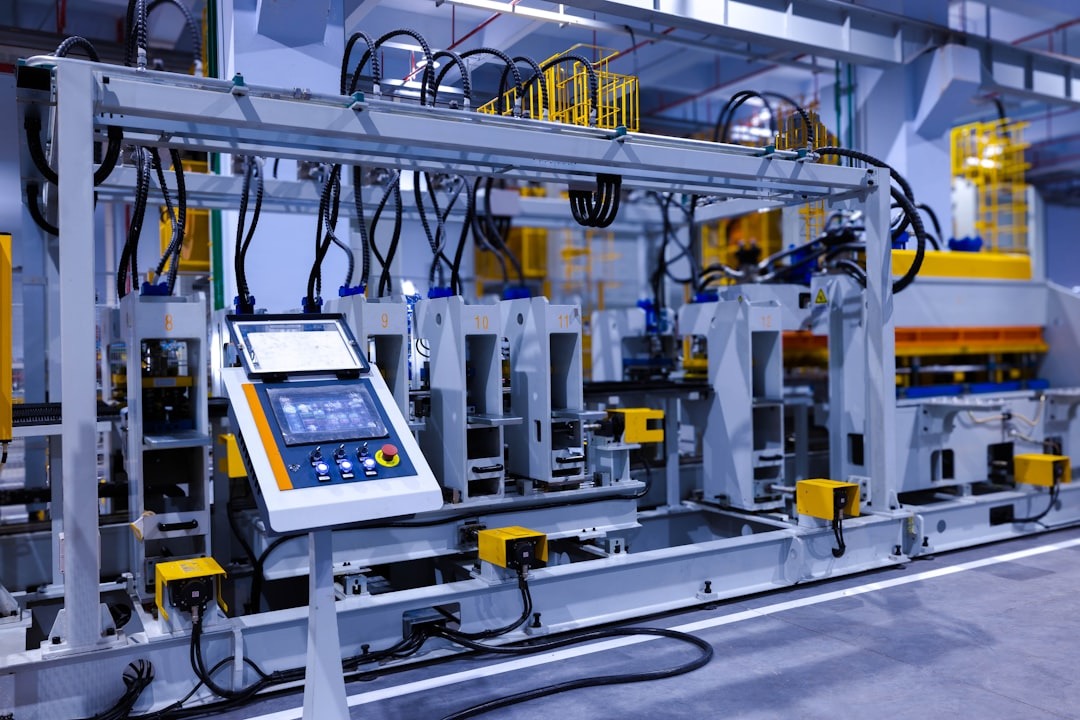
Walk into a modern factory, and you might not notice the revolution at first.
There’s no dramatic countdown. No sudden replacement of humans by machines. Instead, robotic arms glide with calm precision. Autonomous vehicles move materials without pause. Vision systems inspect parts faster than any human ever could.
Manufacturing isn’t changing overnight.
It’s changing every day.
And that quiet transformation is already reshaping global industry.
From Industrial Automation to Intelligent Systems
Early factory robots followed rigid scripts. They welded the same seam. They repeated the same motion. They broke when conditions changed.
Today’s robots behave differently.
Powered by AI, sensors, and real-time analytics, modern systems adapt. They recognise objects, adjust to variability, and collaborate safely alongside humans.
This evolution mirrors trends we examined in How AI Is Changing the Way Software Gets Built,
where systems learn rather than merely execute.
Robots no longer replace tasks.
They optimise processes.
Why Precision Now Beats Scale
For decades, manufacturing rewarded scale. Bigger factories meant lower costs.
Robotics changes that math.
Automated systems deliver:
- Consistent quality
- Reduced waste
- Micron-level precision
- Continuous operation
As a result, smaller, highly automated plants often outperform massive labour-heavy facilities.
According to the International Federation of Robotics, global robot installations continue to rise as manufacturers chase flexibility rather than sheer volume (IFR).
Human–Robot Collaboration Redefines Work
The most significant shift isn’t replacement—it’s collaboration.
Cobots, or collaborative robots, work directly with human operators. They handle repetitive or dangerous tasks while people focus on supervision, problem-solving, and quality control.
This partnership increases safety and productivity simultaneously.
It also reinforces a pattern discussed in AI Won’t Take All Jobs — But Work Will Never Be the Same.
Jobs evolve.
Skills shift.
Work changes shape.
Supply Chains Demand Automation
Recent global disruptions exposed how fragile traditional supply chains really are.
Robotics offers resilience.
Automated factories operate with fewer bottlenecks, predictable output, and localised production. Manufacturers can reshore operations without inflating labour costs.
This structural change aligns with trends covered in Technology Is Changing the Global Economy in Unexpected Ways,
where efficiency now outweighs geographic advantage.
Automation isn’t just about speed.
It’s about stability.
AI Vision Turns Quality Control Into Data
Inspection once relied on human judgment. Fatigue, inconsistency, and subjectivity followed.
Machine vision changes everything.
Cameras paired with AI models now detect defects invisible to the naked eye. Systems learn continuously, improving accuracy with every cycle.
As MIT Technology Review notes, AI-powered inspection reduces recalls while raising quality standards across industries (MIT Technology Review).
Quality control becomes proactive rather than reactive.
Barriers Are Falling Faster Than Expected
Robotics once required massive capital investment and specialised expertise.
That barrier is collapsing.
Cloud-based control systems, modular hardware, and open-source robotics platforms lower costs and complexity. Even mid-sized manufacturers now deploy automation previously reserved for giants.
This democratisation follows the same trajectory we saw in cloud computing and software development (McKinsey).
Robotics scales down.
Access scales up.
Why This Transformation Feels Invisible
Unlike consumer tech, manufacturing changes stay behind closed doors.
Factories don’t trend on social media.
Robotic efficiency doesn’t generate headlines.
Yet the impact reaches everyone—from lower product costs to faster innovation cycles.
The quiet nature of this shift makes it easy to underestimate.
That mistake echoes myths we addressed in Popular Tech Myths That Still Mislead People.
Invisible does not mean insignificant.
The Factory of the Future Is Already Here
Robotics isn’t arriving.
It’s settling in.
Piece by piece, system by system, factories evolve into intelligent networks of humans and machines. Productivity rises. Errors fall. Flexibility becomes standard.
The loud revolutions grab attention.
The quiet ones reshape economies.
Manufacturing’s future won’t announce itself.
It will simply work better than before.
And by the time most people notice, the transformation will already be complete.

Latest from Our Blog
Discover a wealth of knowledge on software development, industry insights, and expert advice through our blog for an enriching experience.
-

Next-Gen Batteries and Energy Storage: The Technology Powering the Clean Energy Revolution
The global energy transition has a storage problem. Solar panels don’t produce electricity at night. Wind turbines don’t spin on command. Meanwhile, electric vehicles demand longer range, faster charging, and safer battery…
-

AI in Climate Modelling and Mitigation: How Intelligent Systems Are Shaping Earth’s Future
Humanity’s climate challenge is vast and complex. Rising temperatures, changing weather patterns, biodiversity loss, and carbon emissions don’t follow tidy equations. Traditional models struggle to deliver reliable forecasts at the scale policymakers…
-

Clean Tech Investing in 2026: Where Capital Is Flowing and Why It Matters
Clean technology is no longer a cottage industry limited to niche sustainability funds or CSR budgets. By 2026, clean tech will have become one of the most significant — and fastest-growing —…

Leave a Reply