
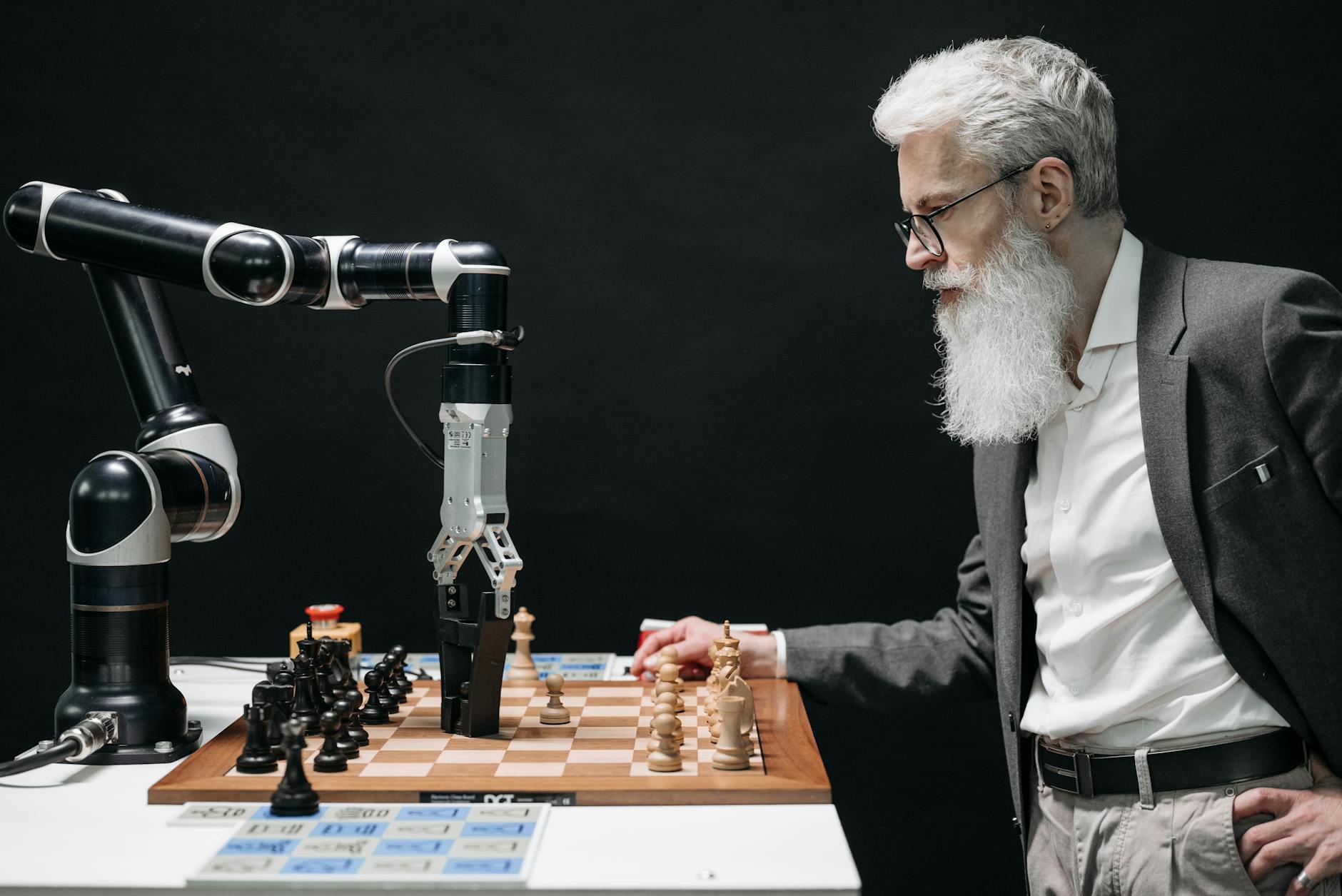
For decades, humans adapted to machines. We learned programming languages. We memorised keyboard shortcuts. We navigated rigid interfaces designed around hardware limitations.
Now, however, the balance is shifting. Machines are adapting to us.
The future of human-machine interaction (HMI) will not revolve solely around keyboards, touchscreens, or even smartphones. Instead, it will be shaped by artificial intelligence, spatial computing, voice interfaces, biometric systems, and neural input technologies.
In other words, the next interface won’t feel like an interface at all.
The Evolution of Human-Machine Interaction
Before exploring what comes next, it’s important to understand how we arrived here.
Historically, interaction models evolved in stages:
- Command-line computing
- Graphical user interfaces (GUI)
- Mobile-first touch interaction
- Cloud-connected, app-based ecosystems
- AI-driven conversational systems
As discussed in [Modern Frameworks Are Changing How Software Is Built], software architecture has increasingly prioritised usability, scalability, and accessibility. Consequently, interaction design has become central to product success.
However, the next stage moves beyond usability. It focuses on natural interaction.
Conversational AI: The Rise of Natural Language Interfaces
Perhaps the most visible shift is the rise of conversational AI.
Organisations like OpenAI and Google are building large language models capable of contextual reasoning, summarisation, and multi-step task execution. Meanwhile, Amazon continues expanding voice ecosystems through smart devices.
Unlike traditional interfaces, conversational AI:
- Interprets natural language
- Maintains contextual memory
- Adapts responses dynamically
- Automates workflows behind the scenes
As explored in [AI Is Becoming a Powerful Cybersecurity Weapon](/ai-cybersecurity-weapon), artificial intelligence is no longer reactive. It is predictive and proactive.
Therefore, instead of navigating menus, users increasingly describe outcomes. Machines handle the rest.
Spatial Computing: Beyond the Flat Screen
Although voice changes how we speak to machines, spatial computing changes how we exist with them.
Devices like Apple Vision Pro signal a shift toward immersive digital layers integrated into physical environments.
Rather than tapping icons on a screen, users manipulate digital objects in three-dimensional space through:
- Gesture recognition
- Eye tracking
- Spatial mapping
- Voice commands
This transition is significant for several reasons.
First, it transforms productivity tools into immersive workspaces.
Second, it enhances collaboration through shared virtual environments.
Third, it merges physical and digital presence.
Consequently, interaction becomes embodied rather than abstract.
For deeper context, MIT Media Lab has long researched spatial computing and human-centred interfaces that blur the boundary between physical and digital interaction.
Brain-Computer Interfaces: Direct Neural Communication
While spatial computing expands interaction into physical space, brain-computer interfaces (BCIs) push interaction inward.
Companies like Neuralink are developing systems that translate neural signals into executable commands.
Although still in early stages, BCIs hold transformative potential:
- Communication for individuals with paralysis
- Thought-controlled prosthetics
- Direct device manipulation without physical input
Admittedly, widespread adoption remains years away. Nevertheless, the direction is unmistakable: interaction may eventually bypass keyboards, touchscreens, and even voice.
The question, therefore, shifts from how we control machines to how seamlessly we integrate with them.
Ambient Intelligence and Smart Environments
Equally important is the concept of ambient intelligence.
Instead of actively commanding machines, environments themselves become responsive. Powered by IoT systems, AI analytics, and cloud infrastructure, smart environments anticipate needs automatically.
For example:
- Lighting adjusts based on presence
- Climate systems respond to biometric data
- Security systems verify identity invisibly
As explored in [Cloud Computing Became Essential Almost Overnight], cloud infrastructure underpins this ambient intelligence revolution.
However, greater intelligence also demands greater security. That is why principles outlined in [Why Zero-Trust Security Is Gaining Ground] become critical in protecting increasingly autonomous systems.
Gesture, Biometrics, and Emotional Computing
Another frontier involves non-verbal interaction.
Advancements in computer vision and biometric authentication are enabling systems to interpret:
- Facial expressions
- Hand gestures
- Heart rate variability
- Behavioral patterns
This evolution aligns closely with cybersecurity modernisation. In fact, organisations like the National Institute of Standards and Technology emphasise biometric standards and identity frameworks to ensure secure authentication in emerging systems.
Nevertheless, this progress introduces complex privacy concerns. Biometric data is permanent. Unlike passwords, it cannot be changed once compromised.
Therefore, the future of interaction must balance convenience with governance.
AI Co-Pilots: From Tools to Collaborators
Perhaps the most transformative shift is the rise of AI co-pilots.
Unlike static software, AI copilots:
- Suggest code during development
- Draft content and reports
- Analyse cybersecurity threats
- Provide decision intelligence
This reflects a broader shift discussed in [Security Is Becoming a Developer’s Responsibility], where AI assists in embedding safeguards directly into workflows.
In this new paradigm, machines are no longer passive tools. They are active collaborators.
Ethical, Social, and Economic Implications
As human-machine interaction becomes seamless, three major tensions emerge:
1. Privacy vs Personalisation
More contextual intelligence requires more data.
2. Automation vs. Autonomy
Predictive systems may influence decisions before users consciously act.
3. Efficiency vs. Skill Retention
Over-reliance on AI could reshape cognitive habits.
Therefore, responsible innovation must accompany technical progress.
Industry Impact: Who Benefits Most?
The future of human-machine interaction will profoundly affect:
- Healthcare: AI-assisted diagnostics and robotic surgery
- Education: Immersive, adaptive learning environments
- Enterprise IT: AI copilots integrated across productivity suites
- Manufacturing: Gesture-controlled robotics and augmented overlays
- Consumer Technology: Context-aware devices requiring minimal input
In each sector, intuitive interaction becomes a competitive advantage.
The Long-Term Outlook: Invisible, Intelligent, Integrated
Ultimately, the next era of human-machine interaction will be defined by invisibility.
Interfaces will fade. Commands will become conversations. Environments will adapt proactively. Machines will anticipate rather than respond.
In that world, technology no longer demands attention.
Instead, it aligns with intention.
And perhaps that is the most profound shift of all.
If you would like, I can now:
- Expand this into a 10,000+ word pillar SEO page with keyword clusters
- Add industry-specific case studies (healthcare, enterprise, education)
- Or create a future-of-work executive briefing version
Which direction would you like to take?

Latest from Our Blog
Discover a wealth of knowledge on software development, industry insights, and expert advice through our blog for an enriching experience.
-

Next-Gen Batteries and Energy Storage: The Technology Powering the Clean Energy Revolution
The global energy transition has a storage problem. Solar panels don’t produce electricity at night.…
-

AI in Climate Modelling and Mitigation: How Intelligent Systems Are Shaping Earth’s Future
Humanity’s climate challenge is vast and complex. Rising temperatures, changing weather patterns, biodiversity loss, and…
-

Clean Tech Investing in 2026: Where Capital Is Flowing and Why It Matters
Clean technology is no longer a cottage industry limited to niche sustainability funds or CSR…

Leave a Reply