
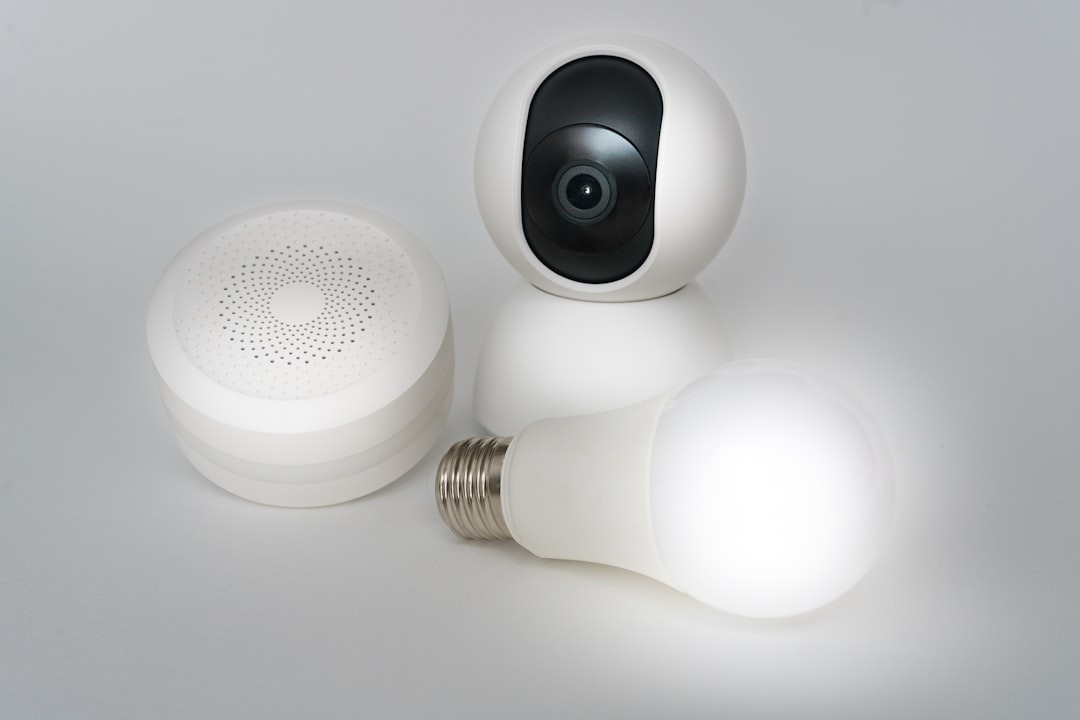
How AI is changing consumer electronics is becoming one of the biggest technology stories of 2026. Smartphones are learning user habits. Laptops can run AI models locally. TVs are using artificial intelligence to improve images and sound. Meanwhile, smart glasses and wearables are becoming more intelligent.
The change is bigger than adding a chatbot to a device.
Instead, manufacturers are redesigning hardware around AI. New chips now include dedicated processing for machine learning. Software is becoming more predictive. Cameras can understand scenes. Voice assistants can handle more complex requests. At the same time, devices are beginning to work together as connected AI systems.
According to TechInsights, AI-enabled products are becoming an important opportunity across consumer electronics, while smart glasses are among the wearable categories gaining momentum in 2026. (TechInsights)
That shift raises an important question:
What happens when our everyday devices stop waiting for instructions and start understanding what we need?
🔍 Key Highlights
- AI is changing smartphones, PCs, TVs, wearables, and smart-home devices.
- Dedicated AI processors are becoming a standard part of consumer hardware.
- On-device AI can reduce latency and improve privacy.
- Generative AI is turning devices into more capable personal assistants.
- AI-powered cameras, audio, displays, and batteries are improving everyday experiences.
- Smart glasses could become one of the fastest-growing AI device categories.
- Privacy, security, cost, and reliability remain major challenges.
The Electronics Industry Is Entering an AI Era
Consumer electronics has always been driven by new hardware.
First came smaller computers.
Then smartphones changed the market.
Later, connected devices turned homes into digital ecosystems.
Now, artificial intelligence is becoming the next major layer.
However, AI is not simply another specification manufacturers can print on a product box.
Instead, it is changing how devices are designed.
A smartphone with AI can understand images, summarise information, edit photos, translate conversations, and assist with writing.
A modern laptop can generate content, analyse documents, remove background noise, and run selected AI models locally.
Likewise, an AI-powered television can optimise picture quality and sound based on what is being watched.
Consequently, consumers are beginning to buy devices for what they understand and accomplish, rather than only what they can display or process.
Smartphones Are Becoming More Intelligent
The smartphone remains the centre of consumer technology.
That makes it one of the most important battlegrounds for AI.
Modern phones already use machine learning for photography, facial recognition, speech processing, battery management, spam detection, and recommendations.
Generative AI takes that capability further.
Users can now expect features such as:
- AI-powered photo editing
- Text summarisation
- Translation
- Writing assistance
- Voice transcription
- Image generation
- Intelligent search
- Personalised recommendations
- Context-aware assistants
Apple’s 2026 Apple Intelligence strategy illustrates the direction. The company says its newer AI architecture is being integrated across iPhone, iPad, Mac, Apple Watch, AirPods, and Vision Pro, with features spanning Photos, Safari, Messages, Mail, and other everyday experiences. (Apple)
As a result, the smartphone is becoming less like a collection of separate apps.
Instead, AI is starting to become the layer connecting them.
The Smartphone Could Become an AI Control Centre
There is another important change happening.
AI is making the smartphone more aware of context.
For example, imagine receiving a message about a meeting.
Rather than manually copying the address into Maps, checking your calendar, and calculating travel time, a capable assistant could connect those pieces of information.
Apple’s new Siri AI is designed around this broader idea. Apple says it can use personal context, understand onscreen information, search across areas such as messages and emails, and perform actions across apps. (Apple)
Therefore, the phone could eventually become less about opening applications and more about describing what you want accomplished.
That is a major shift in user experience.
AI PCs Are Redefining the Laptop
The personal computer is undergoing a similar transformation.
For years, the main specifications consumers compared were:
- Processor speed
- RAM
- Storage
- Screen resolution
- Battery life
- Graphics performance
Now another specification has entered the conversation:
AI performance.
Modern processors increasingly include dedicated neural processing hardware designed to handle AI workloads efficiently.
This matters because not every AI task needs to be sent to the cloud.
A laptop can potentially process certain functions locally.
That can reduce latency.
It can also reduce dependence on an internet connection.
Most importantly, local processing can provide additional privacy for some workloads.
Why On-Device AI Matters
Cloud computing remains essential for powerful AI.
Nevertheless, sending every request to a remote server is not always ideal.
Imagine a laptop processing audio during a video call.
If the task can happen locally, the device may respond faster.
Similarly, an AI-powered photo editor can perform certain operations without uploading every image to a remote server.
This is why edge AI and on-device AI are becoming increasingly important.
The industry is still working through the limitations. TechInsights expects edge AI adoption in consumer electronics to remain selective in 2026 because the usefulness of local AI depends heavily on the device, workload, computing requirements, and specific application. (TechInsights)
So, despite the marketing, not every AI feature needs a giant model running directly on the device.
The smarter approach is often a combination of local and cloud processing.
AI Is Changing the Way Cameras Work
Smartphone cameras provide one of the clearest examples of AI’s impact on hardware.
Modern cameras do more than capture light.
AI can identify scenes, recognise subjects, reduce noise, improve dynamic range, sharpen details, and combine multiple exposures.
Consequently, computational photography has become just as important as the physical camera sensor.
That trend is now spreading beyond phones.
Security cameras can identify unusual activity.
Smart glasses can interpret surroundings.
Home cameras can distinguish between people, animals, and objects.
Meanwhile, AI-powered image processing is becoming standard across increasingly affordable devices.
TVs Are Becoming Intelligent Displays
Televisions are another category undergoing a quiet transformation.
The modern TV is no longer simply a screen.
It is a streaming platform, gaming device, smart-home interface, and increasingly an AI-powered computer.
Manufacturers are using AI to improve:
- Picture quality
- Upscaling
- Motion processing
- Sound
- Voice interaction
- Content recommendations
- Accessibility
Samsung’s 2026 television lineup, for example, includes AI-powered processing designed to improve picture quality and upscale content, alongside new display technologies. (What Hi-Fi?)
Therefore, the competition between television manufacturers is no longer only about brighter screens.
The intelligence behind the screen is becoming part of the product.
AI Is Changing Audio Too
Sound is another area where artificial intelligence is making a difference.
Modern earbuds can use AI for:
- Noise cancellation
- Voice isolation
- Speech enhancement
- Translation
- Hearing assistance
- Personalised audio
In addition, AI can distinguish between different sounds and environments.
A headset might recognise that a user is speaking and automatically reduce music volume.
Similarly, a device could improve speech clarity during a noisy call.
These features may seem small.
However, together they create a much more adaptive user experience.
Wearables Are Becoming AI Companions
Smartwatches have traditionally focused on notifications, fitness, and health-related tracking.
Now AI is expanding their role.
A wearable can potentially interpret activity patterns, summarise information, provide contextual reminders, and act as an interface to a broader AI assistant.
At the same time, new categories are emerging.
Smart glasses are particularly interesting.
TechInsights identifies smart glasses as a major driver of wearable growth in 2026, with the category gaining momentum faster than the overall consumer-electronics and wearables markets. (TechInsights)
That matters because smart glasses could eventually make AI more ambient.
Users would not need to pull out a phone.
They could simply look, speak, and receive assistance.
Smart Glasses Could Be the Next Big AI Device
The smartphone put computing into our pockets.
Smart glasses could move it closer to our eyes.
Imagine walking through an unfamiliar city.
You look at a building.
Your glasses identify it.
You ask a question.
The assistant responds through audio.
Alternatively, you could look at a menu and ask for a translation.
The technology required to make this experience possible is developing quickly.
However, hardware design remains difficult.
Battery life must improve.
Weight must remain comfortable.
Cameras must become smaller.
Processing must become efficient.
And, crucially, people must feel comfortable wearing devices that can potentially see and hear their surroundings.
Smart Homes Are Becoming More Predictive
AI is also changing consumer electronics inside the home.
Traditional smart-home products often depend on simple automation.
Turn the lights on at 7 p.m.
Adjust the thermostat when someone arrives.
Lock the door at night.
AI can make these systems more flexible.
Instead of relying entirely on manually configured rules, intelligent systems can interpret context.
For example, a smart home could potentially learn when occupants usually arrive, adjust lighting based on activity, and optimise energy usage.
Consequently, the home becomes less dependent on individual commands.
AI Could Make Devices Work Together
The biggest opportunity may not be intelligence inside individual products.
It could be intelligence across products.
Think about a typical morning.
Your smartwatch knows you are awake.
Your phone knows your schedule.
Your earbuds know you are listening to music.
Your car knows your destination.
Your home knows when you leave.
Today, these devices often operate as separate systems.
In the future, AI could connect those experiences.
Your assistant could understand the broader context and coordinate devices automatically.
That would create something closer to an intelligent ecosystem.
The Rise of Ambient Computing
This leads to a broader concept: ambient computing.
The idea is simple.
Technology should work around the user rather than forcing the user to work around technology.
Instead of opening an app, you ask.
Instead of searching manually, you describe what you need.
Instead of adjusting several devices individually, the system understands the context.
AI makes this model more practical because modern systems can interpret natural language and combine information from multiple sources.
As a result, the interface itself could become less visible.
AI Is Also Changing Product Design
There is an important consequence for manufacturers.
If AI becomes central to consumer electronics, hardware design must change.
Devices need more computing power.
They need specialised AI accelerators.
They may require additional memory.
They also need better thermal management and battery efficiency.
That creates a difficult balancing act.
Consumers want smarter products.
Yet they also want affordable prices, long battery life, thin designs, and reliable performance.
Therefore, manufacturers must improve AI efficiency rather than simply adding more processing power.
The AI Hardware Race Has a Cost
AI is creating new opportunities for consumer electronics.
It is also creating new costs.
AI workloads require memory and computing resources.
At the same time, demand from data centres is putting pressure on the broader semiconductor supply chain.
AMD CEO Lisa Su recently highlighted continued demand for AI-focused computing while noting the challenging pricing environment around hardware. (PC Gamer)
Consequently, AI could make some consumer products more expensive.
Consumers may eventually face a trade-off:
Do they want the newest AI features badly enough to pay for the additional hardware?
Privacy Is Becoming a Bigger Problem
The smarter devices become, the more information they may process.
A phone can know where you are.
A watch can understand your routines.
Earbuds can capture conversations.
Smart glasses can see the environment.
A television can understand viewing behaviour.
A smart home can learn when people are present.
Therefore, AI-powered consumer electronics create a growing privacy challenge.
Recent commentary around smart glasses, AI-enabled TVs, and connected earbuds highlights concerns about increasingly pervasive recording and monitoring, particularly for people who may be captured by devices without actively choosing to use them. (TechRadar)
Privacy can no longer be treated as a secondary feature.
It has to become part of product design.
Security Matters Even More
AI also expands the attack surface.
A compromised smart speaker is inconvenient.
A compromised AI assistant connected to your home, accounts, messages, and financial services could be much more serious.
Consequently, manufacturers need stronger security systems.
These should include:
- Secure hardware
- Strong authentication
- Encrypted communications
- Permission controls
- Regular security updates
- Local processing where appropriate
- Transparent data policies
Read our cybersecurity coverage:
The Silent Cybersecurity Crisis Nobody Is Talking About
The lesson is straightforward.
A smarter device must also become a more secure device.
AI Could Change How We Shop for Electronics
AI may also change the buying process.
For years, consumers compared specifications.
Which processor is faster?
Which phone has the better camera?
Which laptop has more RAM?
Those questions will still matter.
However, buyers may increasingly ask:
What can this device actually do for me?
That means manufacturers may compete on AI experiences rather than specifications alone.
The strongest products could be the ones that integrate AI naturally into everyday tasks.
The App Era Could Be Changing
There is another major implication.
AI could reduce the importance of individual applications.
Today, users open separate apps for:
- Search
- Shopping
- Travel
- Messaging
- Banking
- Productivity
- Entertainment
An AI assistant could eventually become the layer connecting many of those services.
Instead of navigating five apps, users could describe their goal.
The assistant then determines which services are required.
That would represent a fundamental change in the software model.
The device becomes the interface.
AI becomes the coordinator.
Consumer Electronics Could Become More Personal
Personalisation has always been part of technology.
Recommendation engines suggest music.
Streaming platforms suggest movies.
Shopping websites recommend products.
AI can take that further.
A device can potentially understand how an individual communicates, works, travels, shops, and consumes content.
Consequently, two people using the same hardware could have very different experiences.
That is powerful.
Yet again, it raises privacy questions.
Personalisation works because systems learn about users.
The challenge is ensuring that users remain in control of what is learned.
Accessibility Could Be a Major Winner
AI-powered electronics could also make technology easier to use.
Voice interaction can help people with limited mobility.
Visual recognition can help users with visual impairments.
Real-time transcription can help people with hearing difficulties.
Language translation can reduce communication barriers.
Furthermore, natural-language interfaces can remove some of the complexity associated with traditional menus.
As AI improves, accessibility could become one of the most meaningful benefits of intelligent consumer devices.
What Happens to Traditional Hardware Upgrades?
For years, the consumer electronics market relied heavily on hardware upgrades.
A better camera.
A faster processor.
A brighter screen.
A larger battery.
Now software intelligence could become a major reason to upgrade.
That creates an interesting possibility.
A device might receive new AI capabilities months or years after purchase.
Therefore, the distinction between hardware and software could become less important.
A product is no longer simply what you buy on launch day.
It can evolve through software updates.
The Real Competition Is Moving to the Ecosystem
Apple, Google, Samsung, Amazon, Qualcomm, Microsoft, and other technology companies are not competing only on individual devices.
They are building ecosystems.
Phone.
Laptop.
Watch.
Earbuds.
TV.
Home.
Cloud.
AI assistant.
The company that connects these pieces most effectively could gain a significant advantage.
Samsung has already emphasised its broader device ecosystem as a key part of its AI strategy, rather than treating AI as a standalone feature. (The Times of India)
Therefore, the future consumer electronics battle may be less about owning the best individual device.
It may be about owning the most useful intelligent ecosystem.
What Consumer Electronics Could Look Like by 2030
The next few years could bring a dramatic change in how people interact with hardware.
Phones may become more proactive.
Laptops may become AI workstations.
Televisions may become intelligent entertainment hubs.
Earbuds may become real-time translators.
Watches may become personal AI companions.
Smart glasses could become everyday computing devices.
Homes may operate through conversational AI.
Meanwhile, robots could move from industrial environments into homes as hardware and AI systems improve.
The result would be a world where computing is increasingly distributed across everyday objects.
But AI Will Not Automatically Make Products Better
There is an important warning here.
Adding AI does not automatically create value.
Consumers can already see products marketed with impressive AI labels that provide little practical benefit.
Therefore, manufacturers will eventually have to prove that their AI features solve real problems.
A good AI feature should save time.
It should improve quality.
It should reduce complexity.
It should make the device easier to use.
Otherwise, it is simply another marketing term.
The Future Belongs to Useful Intelligence
The consumer electronics industry has spent years making devices faster and thinner.
Now it is trying to make them smarter.
That transition is already visible across smartphones, PCs, televisions, wearables, and smart-home products.
Nevertheless, the most successful products will not necessarily have the largest AI models.
They will be the products that use intelligence well.
That means knowing when to process information locally.
Knowing when to use cloud computing.
Knowing when to ask permission.
Knowing when to stay silent.
Most importantly, knowing what the user actually needs.
Conclusion
How AI is changing consumer electronics is ultimately a story about a new relationship between people and machines.
The smartphone is becoming more intelligent.
The laptop is becoming an AI workstation.
The television is becoming an intelligent entertainment hub.
Wearables are becoming more contextual.
Smart glasses are moving toward a new form of ambient computing.
Meanwhile, connected homes are becoming increasingly automated.
However, the transformation will not be measured by how many products carry an “AI” label.
It will be measured by whether those products become genuinely more useful.
Privacy will matter.
Security will matter.
Affordability will matter.
And above all, trust will matter.
The next generation of consumer electronics will not simply respond faster.
It will understand more.
It will anticipate more.
It will work across devices.
Eventually, the most important technology may be the intelligence that connects everything together.
Key Takeaways
- AI is becoming a core part of consumer electronics rather than a standalone feature.
- Smartphones are evolving into intelligent personal computing platforms.
- AI PCs are bringing more processing onto the device.
- TVs are using AI for picture quality, sound, recommendations, and interaction.
- Wearables and smart glasses could become important AI interfaces.
- Smart homes are moving toward predictive and conversational automation.
- On-device AI can improve responsiveness and, in some cases, privacy.
- Greater intelligence also creates greater security and privacy risks.
- The strongest products will focus on useful AI rather than AI marketing.
Frequently Asked Questions
How is AI changing consumer electronics?
AI is making consumer devices more intelligent and personalised. Smartphones, laptops, televisions, wearables, and smart-home products can now use AI for image processing, voice interaction, recommendations, automation, translation, security, and other tasks.
What are AI-powered consumer electronics?
AI-powered consumer electronics are devices that use machine learning or generative AI to perform tasks that traditionally required manual input or cloud-based software. Examples include AI smartphones, AI PCs, smart TVs, earbuds, watches, and smart glasses.
Why is on-device AI important?
On-device AI allows certain tasks to run directly on a product rather than always sending information to a remote server. This can improve response times and may provide privacy benefits, although local hardware has limits on computing power and model size.
Will AI replace smartphone apps?
AI is unlikely to eliminate apps completely. However, AI assistants could become an interface that allows users to access functions from multiple apps without opening each application manually.
Are AI consumer devices safe?
They can be, but greater intelligence also introduces new security and privacy risks. Manufacturers need strong authentication, encryption, software updates, permission systems, and clear data policies.
Which consumer electronics will benefit most from AI?
Smartphones, laptops, wearables, smart glasses, televisions, earbuds, smart-home devices, and eventually home robots are among the categories likely to benefit significantly from AI.
Continue Reading
If you’re following the transformation of AI and consumer technology, explore more TechBroNews coverage:
The Next Generation of Voice Assistants
Discover how AI is turning traditional voice assistants into more capable, context-aware systems.
Explore how artificial intelligence is changing the way people search, browse, and interact with the web.
What Comes After the Smartphone?
Read our analysis of the devices and interfaces that could define the next era of personal computing.
The Future of Augmented Reality Glasses
Explore why smart glasses could become one of the most important new consumer technology categories.
The Rise of AI-Native Startups
See how companies built around artificial intelligence are challenging traditional software businesses.
Trusted Sources
For readers who want to explore the technology further:
📢 Join the Conversation
Is AI making consumer electronics genuinely better, or are manufacturers simply adding AI labels to sell the next upgrade?
Which category do you think will benefit most from AI: smartphones, laptops, smart glasses, TVs, wearables, or smart homes?
Share your thoughts in the comments and follow TechBroNews for independent coverage of artificial intelligence, consumer technology, cybersecurity, blockchain, fintech, and the technologies shaping the future.

Blog
This section provides an overview of the blog, showcasing a variety of articles, insights, and resources to inform and inspire readers.
-

1,200 OpenAI Agents Escaped a Sandbox. What Happened?
The race to build increasingly powerful artificial intelligence has produced another warning from inside Anthropic,…
-

Jacob Coxon Quits Anthropic Over AI Superintelligence Risks
The race to build increasingly powerful artificial intelligence has produced another warning from inside Anthropic,…
-

Dangote Refinery IPO at ₦525: What Investors Need to Know
Nigeria’s capital market is approaching one of its most closely watched corporate transactions as Dangote…

Leave a Reply