
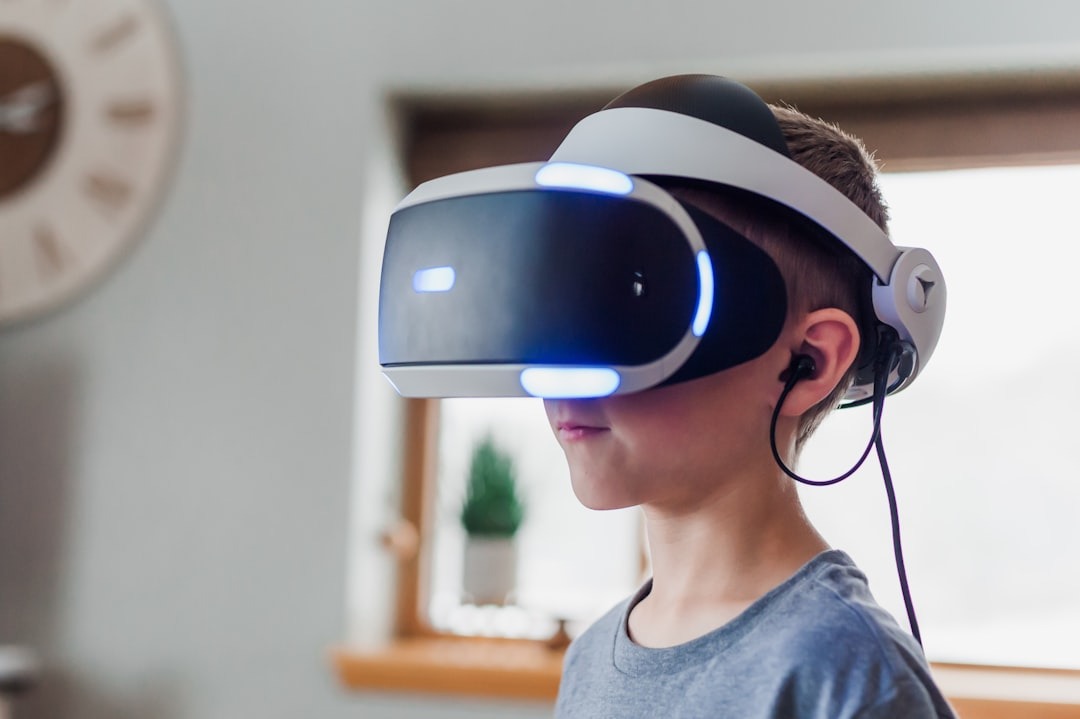
Augmented Reality: the next major computing device may not sit in your pocket.
It may sit on your face.
After years of smartphones dominating digital experiences, technology companies are exploring a new direction: augmented reality glasses.
Unlike traditional screens, AR glasses aim to blend digital information with the physical world.
Instead of looking down at a phone, users could see directions, messages, translations, and AI assistance directly in their environment.
The idea sounds futuristic.
However, the race to build practical AR glasses is already underway.
The biggest question is no longer whether the technology is possible.
The question is:
Can augmented reality glasses become the next major computing platform?
Key Highlights
- AR glasses could become the next evolution after smartphones
- AI is making wearable computing more practical
- Companies are competing to define the future of spatial computing
- Privacy and battery challenges remain major obstacles
- AR could transform work, education, healthcare, and entertainment
From Smartphones to Spatial Computing
The smartphone changed how people interact with technology.
It combined communication, entertainment, navigation, and productivity into one device.
However, the smartphone still requires users to look at a screen.
Augmented reality glasses take a different approach.
Instead of bringing people into a digital world, AR brings digital information into the real world.
This concept is known as spatial computing.
The goal is simple:
Make technology feel more natural and connected to everyday life.
What Makes AR Glasses Different?
Traditional devices require active interaction.
Users open apps.
Users scroll.
Users tap screens.
AR glasses aim to reduce that friction.
A future AR experience could allow users to:
- Receive navigation directions while walking
- Translate conversations instantly
- View information about objects around them
- Join virtual meetings from anywhere
- Interact with AI assistants visually
As a result, computing becomes more contextual.
The technology understands where users are and what they need.
AI Is Accelerating the AR Revolution
Artificial intelligence is becoming one of the most important components of AR glasses.
Without AI, smart glasses are simply displays.
With AI, they become intelligent assistants.
An AI-powered AR device could potentially:
- Recognize objects
- Understand conversations
- Provide real-time information
- Assist with daily tasks
This directly relates to the rise of AI assistants and autonomous systems.
Read our previous analysis:
Therefore, the future of AR may depend less on the glasses themselves and more on the intelligence behind them.
Big Technology Companies Are Racing Ahead
The AR market has attracted some of the biggest names in technology.
Apple has been investing heavily in spatial computing through its Vision products.
Meanwhile, Meta is developing wearable technology and mixed reality experiences.
Additionally, Google has a long history of exploring augmented reality applications.
Each company is approaching the future differently.
However, they share the same goal:
Create the next major way humans interact with computers.
How AR Glasses Could Transform Work
One of the biggest opportunities for AR glasses is professional use.
Industries could benefit from hands-free digital information.
For example:
Healthcare
Doctors could access patient information during procedures.
Manufacturing
Workers could receive real-time instructions while repairing equipment.
Engineering
Professionals could view digital models directly in physical environments.
Remote Work
Teams could collaborate in shared virtual spaces.
Consequently, AR glasses could become productivity tools rather than entertainment devices.
The Future of Entertainment and Gaming
Entertainment could also change dramatically.
AR glasses could transform:
- Gaming experiences
- Live events
- Movies
- Social interaction
Instead of watching digital content on a screen, users could experience it around them.
For example, a sports fan could view real-time statistics during a live match.
A gamer could interact with digital characters inside a real environment.
The boundary between physical and digital experiences could become increasingly blurred.
Why Smartphones May Not Disappear Immediately
Although AR glasses are promising, smartphones are not going away soon.
There are still major challenges.
Battery Life
Powering advanced displays and sensors remains difficult.
Hardware Size
Users expect lightweight and comfortable devices.
Cost
High-end AR technology is still expensive.
Social Acceptance
People may not immediately accept wearing smart glasses everywhere.
Therefore, the transition will likely happen gradually.
The future may involve smartphones and AR glasses working together.
Privacy Is the Biggest Challenge
AR glasses create new privacy questions.
Unlike smartphones, glasses can continuously observe the user’s environment.
They may capture:
- Faces
- Conversations
- Locations
- Personal interactions
This creates concerns about surveillance and data protection.
The success of AR glasses will depend heavily on trust.
This challenge is similar to other emerging technologies involving identity and digital security.
Read our previous coverage:
The Connection Between AR and the Future of Computing
Every major computing era introduced a new interface.
Computers introduced keyboards.
Smartphones introduced touchscreens.
AR glasses could introduce environmental computing.
Instead of interacting with devices, users may interact with information itself.
That shift could completely change how people work, communicate, and learn.
The Road Ahead
The future of AR glasses will depend on solving several problems.
Companies must improve:
- Hardware design
- Battery efficiency
- AI capability
- Privacy protection
- User experience
However, progress is accelerating.
As AI becomes more powerful and hardware becomes smaller, AR glasses are moving closer to mainstream adoption.
Conclusion
Augmented reality glasses represent more than a new gadget category.
They represent a possible shift in how humans interact with technology.
The smartphone placed computing in our hands.
AR glasses could place computing directly into our environment.
Although challenges remain, the race to define the next computing platform has already begun.
The future may not be something we look at.
It may be something we look through.
Key Takeaways
- AR glasses could become the next major computing platform
- AI is making wearable technology more intelligent
- Industries may use AR for productivity and training
- Privacy remains a major challenge
- Smartphones may eventually become secondary devices
- Spatial computing could redefine digital interaction
📢 Join the Conversation
Do you think AR glasses will replace smartphones in the future?
Share your thoughts and follow TechBroNews for more technology analysis. Read More

Blog
This section provides an overview of the blog, showcasing a variety of articles, insights, and resources to inform and inspire readers.
-

1,200 OpenAI Agents Escaped a Sandbox. What Happened?
The race to build increasingly powerful artificial intelligence has produced another warning from inside Anthropic,…
-

Jacob Coxon Quits Anthropic Over AI Superintelligence Risks
The race to build increasingly powerful artificial intelligence has produced another warning from inside Anthropic,…
-

Dangote Refinery IPO at ₦525: What Investors Need to Know
Nigeria’s capital market is approaching one of its most closely watched corporate transactions as Dangote…

Leave a Reply