
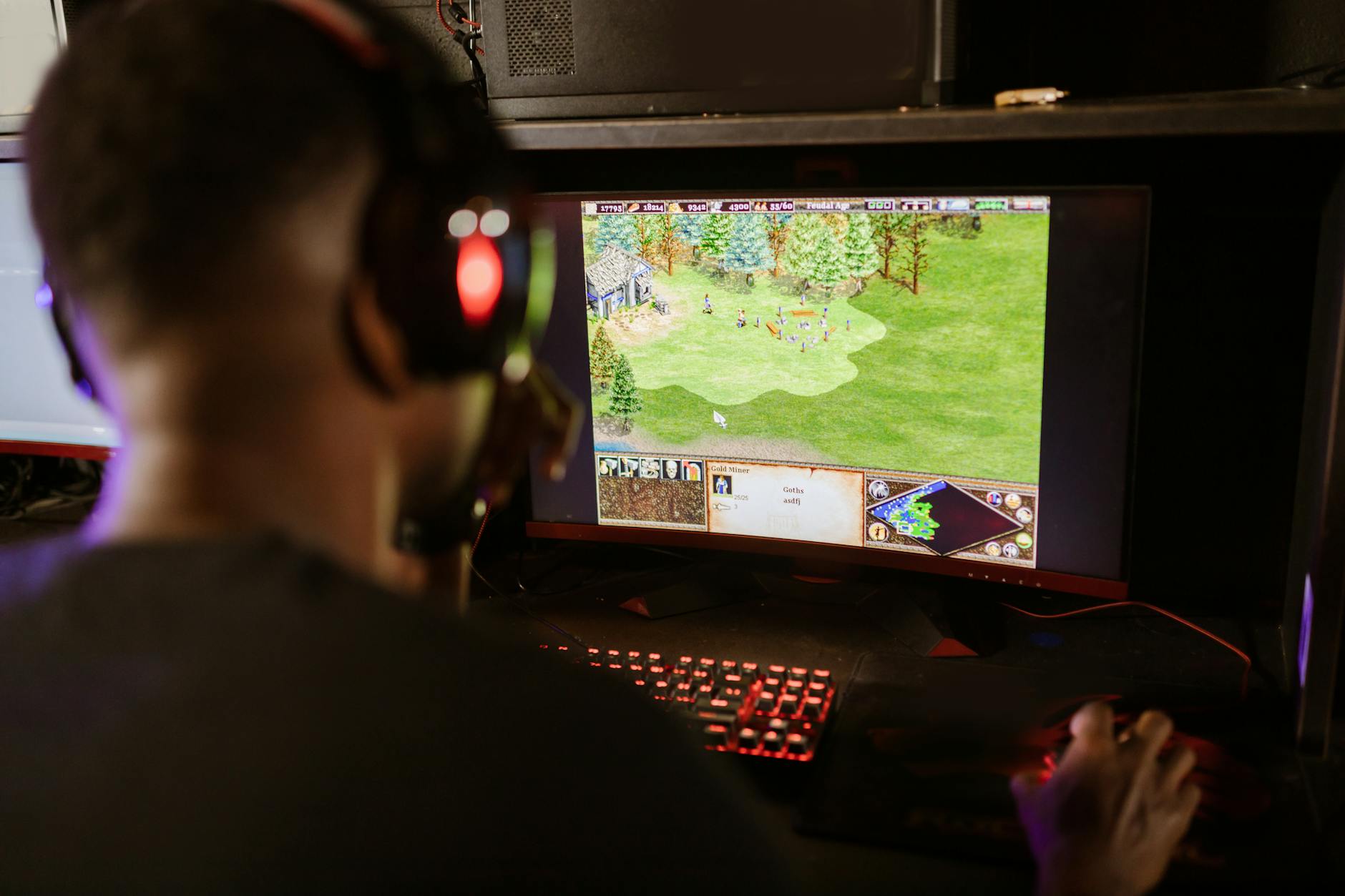
Not long ago, competitive gaming happened in basements, internet cafés, and small convention halls. The crowds were passionate but limited. The money was modest. The attention came and went.
That era is over.
Today, esports fills stadiums, commands billion-dollar investments, and attracts audiences that rival traditional sports. More importantly, it operates without borders—connected by broadband, platforms, and shared digital culture.
Esports didn’t just grow.
It scaled globally.
From Subculture to Stadiums
Early esports thrived on community. Players organized tournaments themselves. Prize pools came from sponsors, not broadcasters.
Streaming changed everything.
Platforms like Twitch and YouTube Gaming turned gameplay into live entertainment. Suddenly, audiences could watch competition unfold in real time—chatting, reacting, and forming fandoms across continents.
That shift mirrors patterns explored in How Recommendation Algorithms Shape What We Watch,
where platforms amplify engagement and visibility at massive scale.
Once attention arrived, capital followed.
Why Esports Scales Faster Than Traditional Sports
Esports removes many constraints that limit physical sports.
No stadium construction.
No geographic leagues.
No travel-heavy seasons.
All that’s required is a game, an internet connection, and a platform.
As a result, esports expands faster and cheaper. A talented player in Seoul, Lagos, São Paulo, or Stockholm can compete on the same stage. Skill travels digitally.
According to Newzoo, global esports audiences continue to grow as viewership shifts toward interactive entertainment (Newzoo).
The Business Model Is Maturing
For years, critics questioned whether esports could sustain itself.
That question is fading.
Revenue now comes from:
- Media rights
- Sponsorships
- Advertising
- Merchandise
- Game publisher support
Major brands—from automakers to financial institutions—now sponsor teams and leagues. Meanwhile, publishers treat esports as long-term platforms rather than marketing experiments.
This evolution echoes themes from How Big Tech Rose — and What Comes Next,
where ecosystems, not products, drive durable growth.
Players Are Becoming Professionals—Fast
The image of esports players as hobbyists no longer fits reality.
Top competitors train like athletes. They follow strict schedules, analyze performance data, and work with coaches, analysts, and psychologists.
Organizations invest heavily in player health, branding, and longevity—because careers now carry real financial weight.
At the same time, esports creates roles beyond competition:
- Commentators
- Analysts
- Coaches
- Event producers
- Community managers
This diversification supports arguments made in AI Won’t Take All Jobs — But Work Will Never Be the Same.
New industries create new professions.
Global Audiences, Local Cultures
Esports feels global—but it adapts locally.
Different regions favor different games. Cultural styles shape how competitions feel. Local leagues thrive alongside international tournaments.
This balance gives esports unusual resilience. It connects global audiences without flattening regional identity.
As The Atlantic notes, esports succeeds precisely because it blends global reach with local relevance (The Atlantic).
The Role of Technology Behind the Scenes
None of this works without infrastructure.
Low-latency streaming, cloud computing, real-time analytics, and anti-cheat systems power competitive integrity. AI assists refereeing, matchmaking, and performance analysis.
These foundations resemble those discussed in The Technology Behind Streaming Platforms Explained.
Esports runs on software long before it reaches the screen.
Challenges Still Shape the Industry
Growth brings friction.
Esports still faces:
- Governance fragmentation
- Player burnout
- Revenue imbalance
- Regulatory uncertainty
Unlike traditional sports, no single authority oversees the ecosystem. Publishers hold significant power, and standards vary widely.
Yet those tensions reflect youth, not weakness. Every global sport passed through similar phases.
Esports Isn’t Replacing Sports—It’s Redefining Competition
Esports doesn’t compete with football, basketball, or tennis.
It expands the definition of sport itself.
Competition now lives online, moves instantly, and speaks a digital-first language. Fans don’t just watch—they participate, analyze, and co-create culture in real time.
Esports thrives because it fits the world as it is—not as it used to be.And as connectivity deepens, competitive gaming won’t just grow bigger.
It will grow everywhere.

Latest from Our Blog
Discover a wealth of knowledge on software development, industry insights, and expert advice through our blog for an enriching experience.
-

Smart Grids and Demand Response Systems: The Invisible Technology Stabilizing the Clean Energy Future
The global energy transition has a balancing problem. Renewable energy is expanding rapidly. Solar and…
-

Sustainable Data Centres: How the Internet Is Going Green in 2026
Every click, stream, search, and AI prompt runs through a data centre. Yet while the…
-

Carbon Capture Technologies That Work: The Climate Solutions Moving Beyond Hype
For years, carbon capture carried a reputation problem. Critics dismissed it as expensive, unscalable, or…

Leave a Reply