
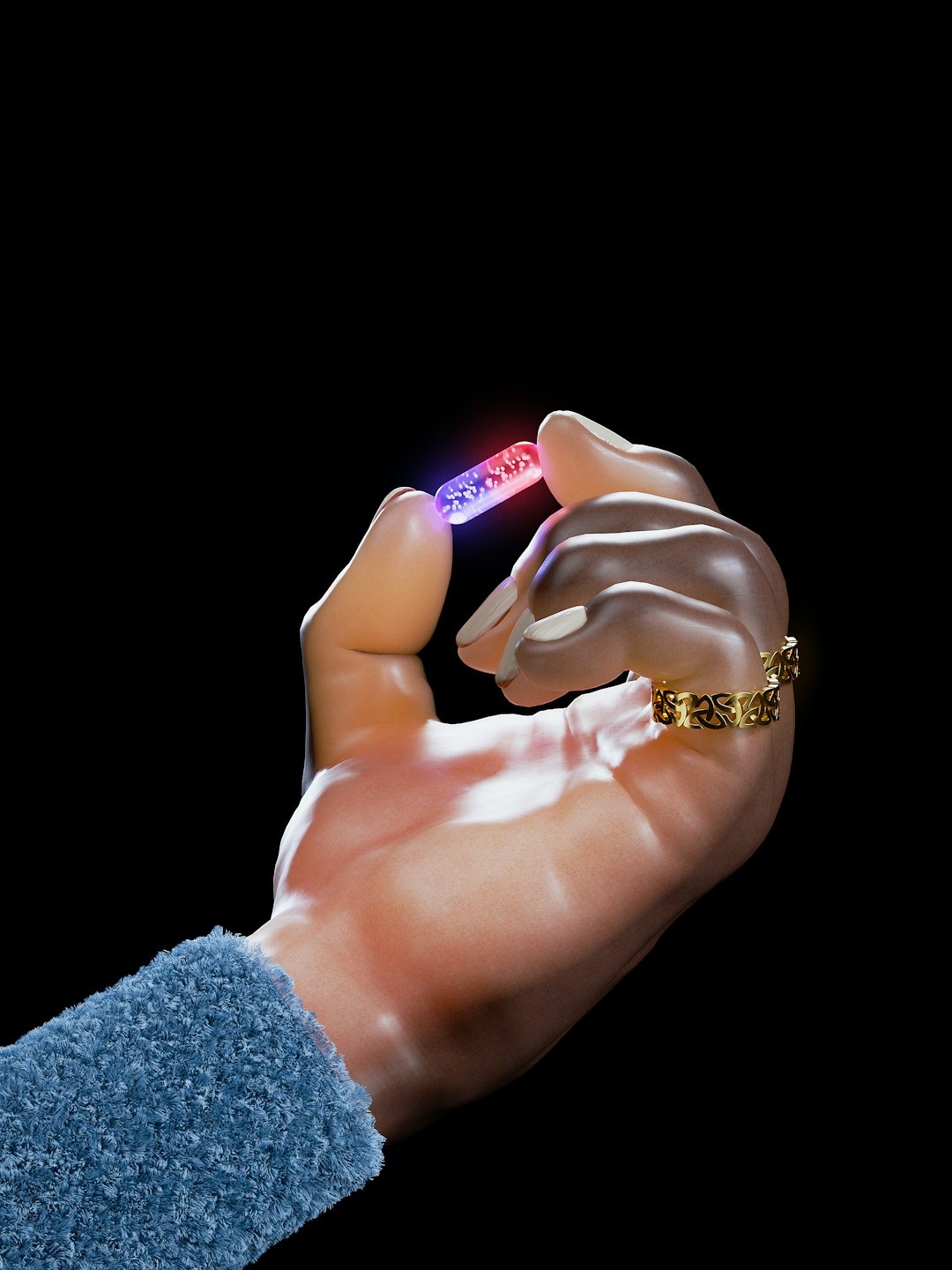
A tiny chip beneath the skin.
A neural implant translating thoughts into movement.
A cardiac device transmitting data to the cloud in real time.
What once felt speculative now exists inside operating rooms—and increasingly, inside people.
Implantable technology is advancing at a pace few predicted. Yet as these devices move from life-saving tools to lifestyle enhancements, one question grows louder:
When technology lives inside your body, who controls the data?
This is not merely a medical story. It is a privacy story. A cybersecurity story. A regulatory story. And perhaps most importantly, a human story.
What Exactly Is Implantable Tech?
Implantable technology refers to electronic devices placed inside the human body to monitor, assist, or enhance biological function.
Historically, this category included pacemakers and cochlear implants. However, today’s generation of implantable tech goes much further.
Leading innovators like Neuralink are developing brain-computer interfaces designed to restore mobility and potentially augment cognition. Meanwhile, companies such as Medtronic continue advancing connected cardiac and neurostimulation devices.
Consequently, implants now do more than stabilise health. They generate continuous data streams, connect to cloud platforms, and integrate into digital ecosystems.
In other words, the body has become a network node.
The Promise: Precision Medicine From the Inside Out
First and foremost, implantable tech delivers undeniable medical value.
1. Real-Time Health Monitoring
Modern pacemakers and glucose monitors can transmit biometric data to physicians instantly. Rather than relying on periodic checkups, doctors receive continuous insight into patient health.
As a result, treatment becomes proactive instead of reactive.
2. Neurological Restoration
Brain-computer interface research conducted at institutions like Stanford University demonstrates that neural implants can help paralysed patients regain communication capabilities.
In certain trials, participants have translated thought into on-screen text.
This is not an incremental improvement. It is transformative.
3. Personalised Therapeutic Adjustments
Connected implants can adjust stimulation levels automatically based on detected patterns. For instance, neurostimulators for Parkinson’s disease can adapt to tremor intensity in real time.
That level of responsiveness represents a shift toward truly personalised medicine.
However, Here’s Where It Gets Complicated
While the medical promise is extraordinary, the privacy implications are unprecedented.
Implantable devices collect some of the most intimate data imaginable:
- Heart rhythms
- Neural signals
- Movement patterns
- Hormonal levels
- Emotional responses (in certain research contexts)
Now consider the next logical step: Where is that data stored? Who owns it? Who can access it?
Unlike a smartphone, an implant cannot simply be powered off.
Data Ownership: The New Frontier of Bodily Autonomy
Traditionally, medical data has been governed by healthcare privacy regulations such as HIPAA in the United States. However, implantable technology blurs regulatory lines.
If a neural implant connects to cloud servers operated by a private company, does the company retain rights to anonymised data? Can aggregated datasets be used to train AI systems?
These questions are no longer theoretical.
As discussed in Why Data Privacy Is Becoming a Global Concern, digital ecosystems increasingly commodify behavioural data. Implantable tech could extend that commodification into biological territory.
Therefore, the debate expands from digital privacy to physiological sovereignty.
The Cybersecurity Risk Few Patients Consider
Connectivity improves care—but it also creates vulnerability.
Researchers have demonstrated that certain medical devices could theoretically be accessed remotely if improperly secured. Although real-world exploitation remains rare, the possibility alone raises concern.
Imagine a malicious actor attempting to manipulate:
- Insulin delivery systems
- Neurostimulators
- Cardiac pacing devices
That scenario shifts cybersecurity from financial risk to bodily risk.
As covered in The Cyber Threats That Matter Most Right Now, connected infrastructure remains a prime target. Implantable devices must now adopt zero-trust architectures and encrypted communication standards.
Security, therefore, becomes inseparable from safety.
Enhancement vs. Treatment: A Line That’s Blurring
Initially, implantable tech focused on therapeutic necessity.
However, enhancement applications are entering public discourse.
Could memory augmentation become viable?
Could sensory amplification become elective?
Could productivity implants enter corporate environments?
While these scenarios remain speculative, early-stage research indicates that cognitive enhancement may not stay confined to medical necessity forever.
That shift would fundamentally redefine what it means to be “human.”
And more critically, it would intensify inequality between enhanced and non-enhanced individuals.
Ethical Implications: Consent in a Connected Era
Consent becomes increasingly complex when devices operate continuously.
Patients may consent to implantation. However, do they fully understand:
- Long-term data storage policies?
- Third-party access agreements?
- Firmware update implications?
- AI model training use?
Unlike wearable devices, implants operate internally and persistently.
Therefore, informed consent must evolve alongside technological capability.
The Regulatory Landscape Is Catching Up
Regulatory bodies worldwide are beginning to respond.
The Food and Drug Administration has introduced stricter cybersecurity guidance for connected medical devices. Meanwhile, the European Commission continues refining digital health regulations under broader data protection frameworks.
However, regulation typically lags innovation.
Thus, policymakers face a dual challenge:
Encourage medical advancement—without compromising individual rights.
The Social Perception Shift
Perhaps equally important is public psychology.
Implantable tech once carried stigma. Today, attitudes are shifting. Younger generations raised on wearable health devices and constant connectivity may view implants as a natural extension of digital life.
In fact, normalisation may accelerate adoption faster than policy frameworks can adapt.
However, viral enthusiasm often overshadows structural questions.
And those questions deserve attention.
A Case Study: Neural Interfaces in Rehabilitation
In recent clinical trials, neural interface systems enabled patients with spinal injuries to regain controlled movement through brain-signal interpretation.
The promise is undeniable.
Yet researchers also highlighted data governance complexities. Neural signals contain deeply personal information—potentially even cognitive patterns.
Who safeguards that data?
Who defines ethical boundaries?
These are not futuristic hypotheticals. They are present-day decisions.
The Future: Human-Machine Integration
Looking forward, implantable tech will likely integrate with:
- AI-driven diagnostics
- Edge computing for on-device analysis
- Blockchain-secured medical records
- Real-time digital twins of patient physiology
The result? A fully interconnected biological-digital ecosystem.
As explored in How Humans Will Interact With Machines Next, interaction models are shifting rapidly. Implantable tech represents the most intimate interface yet.
The Core Question: Empowerment or Exposure?
Implantable technology offers extraordinary empowerment:
- Longer lives
- Restored mobility
- Real-time health intelligence
- Personalised therapeutic precision
However, it simultaneously introduces unprecedented exposure:
- Cyber vulnerabilities
- Data exploitation
- Regulatory ambiguity
- Ethical complexity
Innovation does not eliminate risk. It redistributes it.
The Body as the Final Frontier
For decades, technology surrounded us. Then it moved into our pockets. Then onto our wrists.
Now, it is moving inside us.
Implantable tech represents one of the most consequential technological shifts of this century—not because it is flashy, but because it is intimate.
The future of healthcare may indeed live beneath the skin.
But the future of privacy must evolve just as deeply.
Because when technology integrates with biology, the stakes rise dramatically.
And in that world, safeguarding human autonomy becomes more important than ever. Read More

Latest from Our Blog
Discover a wealth of knowledge on software development, industry insights, and expert advice through our blog for an enriching experience.
-

The AI Browsers Wars: Who Controls the Future?
For years, web browsers looked like a solved problem. Google Chrome dominated the market. Microsoft…
-

AI Agents: The End of Traditional Software? The Next Computing Revolution Explained
For decades, software has followed a familiar pattern. Need to manage projects? Open a project…
-

Biometric Security: Risks and Rewards in a Data-Driven World
From unlocking smartphones with a glance to passing through airport gates without showing a passport,…

Leave a Reply