
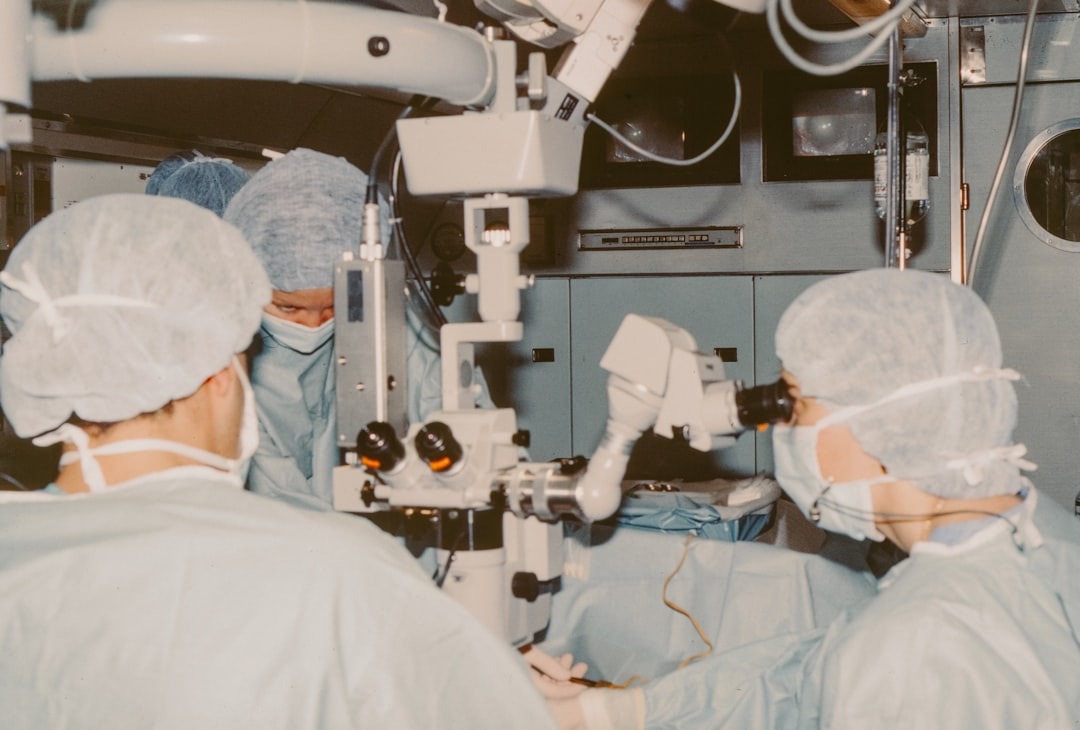
If you had told a surgeon twenty years ago that they could operate on a patient thousands of miles away, they would have called it science fiction.
Today, it’s clinical reality.
Remote surgery and robotic assistance are no longer experimental side projects inside elite research labs. Instead, they are rapidly becoming pillars of modern healthcare infrastructure—driven by robotics, high-speed connectivity, artificial intelligence, and real-time data systems.
And perhaps more importantly, they are quietly reshaping what “access to care” really means.
From Operating Room to Global Network
Robotic-assisted surgery gained early momentum with systems like the da Vinci Surgical System, developed by Intuitive Surgical. Initially introduced to enhance minimally invasive procedures, the platform allowed surgeons to operate with greater precision, stability, and visualisation.
However, what began as a tool for steadier hands soon evolved into something far more transformative.
As high-bandwidth networks improved—and especially with the global rollout of 5G—latency dropped dramatically. That shift made real-time remote surgical control increasingly viable.
In other words, the operating room expanded beyond hospital walls.
How Remote Surgery Actually Works
At its core, remote robotic surgery combines four critical components:
- A robotic surgical platform at the patient’s location
- A surgeon control console (which can be in another hospital or another country)
- Ultra-low latency connectivity infrastructure
- Advanced imaging and AI-enhanced visualisation systems
The surgeon manipulates controls at a console, and robotic arms replicate those movements with extreme precision. Meanwhile, high-definition 3D cameras transmit magnified views of the surgical field in real time.
Notably, robotic systems filter tremors and allow micro-movements beyond natural human capability.
Consequently, procedures can become more accurate, less invasive, and often safer.
Why Remote Surgery Matters Now
At first glance, robotic surgery may appear to be a luxury innovation for top-tier hospitals. However, its broader impact lies elsewhere: equitable access to expertise.
Consider rural regions with limited access to specialised surgeons. Traditionally, patients must travel long distances for complex procedures. Remote robotic systems, however, allow leading specialists to operate without physically relocating.
Moreover, during global crises—such as pandemics—remote surgical capabilities reduce exposure risks while maintaining care continuity.
In effect, geography begins to matter less.
The Role of AI in Surgical Assistance
While robotics provides mechanical precision, artificial intelligence increasingly enhances decision support.
AI-powered systems can:
- Highlight anatomical structures in real time
- Flag potential complications
- Analyse surgical data mid-procedure
- Suggest optimised instrument positioning
Research institutions such as Johns Hopkins University are actively exploring semi-autonomous surgical systems capable of performing defined procedural tasks under supervision.
However, this does not mean AI replaces surgeons.
Rather, it augments their situational awareness.
As discussed in AI Is Becoming a Powerful Cybersecurity Weapon, AI thrives in pattern recognition. In surgical environments, that strength translates into predictive guidance and enhanced imaging analytics.
Real-World Case Study: The 5G Breakthrough
In a landmark moment, surgeons in China successfully performed remote procedures over 5G networks, operating on patients hundreds of miles away with negligible latency.
The demonstration proved something critical:
Remote surgery is no longer constrained by bandwidth limitations.
Telecommunications companies and hospitals now collaborate closely to ensure network redundancy, secure data transmission, and real-time failover systems. Because in surgery, even milliseconds matter.
The Benefits: Beyond the Hype
1. Enhanced Precision
Robotic systems reduce hand tremors and allow micro-movements measured in millimetres.
2. Reduced Recovery Time
Minimally invasive techniques typically result in smaller incisions and faster healing.
3. Access to Specialists
Remote surgery expands access to world-class expertise.
4. Data-Driven Improvement
Every robotic procedure generates data. Over time, analytics improve surgical best practices.
The Challenges No One Should Ignore
Yet despite its promise, remote robotic surgery faces significant hurdles.
Connectivity Reliability
Ultra-low latency is non-negotiable. Network disruptions could have serious consequences.
Cybersecurity Risks
Connected surgical systems present attack surfaces. As explored in Ransomware Attacks Are Evolving — Here’s How, healthcare institutions remain prime targets.
Cost Barriers
Robotic platforms can cost millions of dollars, limiting accessibility for smaller hospitals.
Legal and Regulatory Complexity
Cross-border surgeries raise licensing, malpractice, and liability questions.
Governments and healthcare regulators must evolve alongside the technology.
The Human Element Remains Central
Despite rapid technological advances, remote surgery remains fundamentally human-led.
Patients still require trust. Surgeons still require judgment. Ethical oversight remains essential.
Robotic assistance amplifies capability—but it does not eliminate responsibility.
Indeed, the future likely lies in collaborative systems where:
- Surgeons retain control
- AI provides real-time analysis
- Robotics ensure precision
- Networks enable reach
This layered approach balances innovation with safety.
The Broader Healthcare Transformation
Remote surgery does not exist in isolation. It intersects with broader trends:
- Cloud-based medical records
- AI-driven diagnostics
- Wearable health monitoring
- Real-time data analytics
As healthcare digitisation accelerates, surgical robotics becomes one node in a larger intelligent ecosystem.
Hospitals are no longer just physical facilities. They are becoming distributed digital networks of expertise.
What the Next Decade May Bring
Looking ahead, several developments appear likely:
- Greater miniaturisation of robotic systems
- Improved haptic feedback (restoring tactile sensation remotely)
- AI-assisted autonomous subtasks
- Expanded use in battlefield and disaster zones
- Integration with augmented reality surgical overlays
Furthermore, collaborations between companies like Medtronic and leading research hospitals suggest accelerated innovation cycles.
In short, remote surgery is not plateauing. It is scaling.
A New Definition of Presence
Remote surgery and robotic assistance fundamentally challenge one assumption: that physical presence defines care.
Today, expertise travels digitally.
Precision is enhanced mechanically.
And access increasingly depends on infrastructure rather than proximity.
While technical, regulatory, and economic challenges remain, the trajectory is clear.
Remote robotic surgery represents more than a medical innovation—it represents a redefinition of healthcare delivery in a connected world.
The scalpel may still cut.
But increasingly, it does so guided by robotics, powered by data, and connected across continents. Read More

Latest from Our Blog
Discover a wealth of knowledge on software development, industry insights, and expert advice through our blog for an enriching experience.
-

The AI Browsers Wars: Who Controls the Future?
For years, web browsers looked like a solved problem. Google Chrome dominated the market. Microsoft…
-

AI Agents: The End of Traditional Software? The Next Computing Revolution Explained
For decades, software has followed a familiar pattern. Need to manage projects? Open a project…
-

Biometric Security: Risks and Rewards in a Data-Driven World
From unlocking smartphones with a glance to passing through airport gates without showing a passport,…

Leave a Reply