
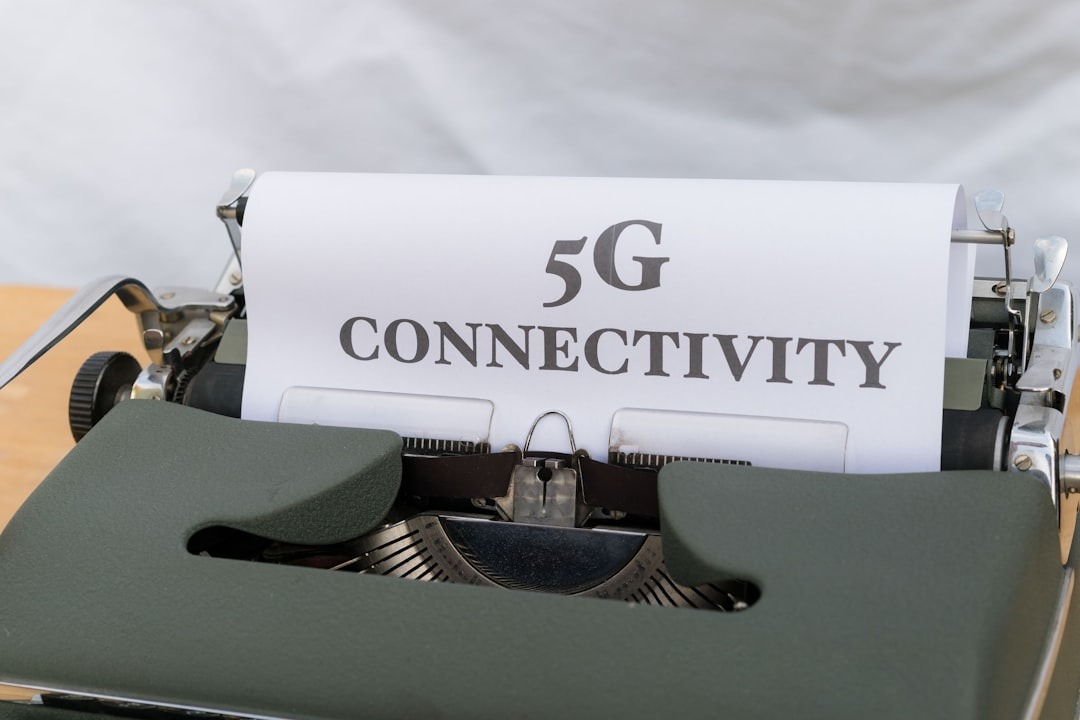
For years, 5G was marketed as a revolution that would arrive with fireworks. Instead, its real impact crept in quietly—woven into everyday experiences most people barely notice. That subtlety, however, doesn’t make it any less transformative. In fact, it’s precisely because 5G fades into the background that its influence now runs so deep.
Unlike previous wireless upgrades, 5G isn’t just about speed. It’s about capability. While 4G connected people, 5G connects systems—machines, infrastructure, and environments—at a scale the internet has never handled before.
To understand why that matters, it helps to look beyond smartphones.
From Faster Phones to Smarter Networks
Yes, 5G delivers blistering download speeds. Streaming ultra-high-definition video, cloud gaming, and real-time collaboration now feel effortless. But speed alone doesn’t explain why industries are quietly restructuring around it.
What truly sets 5G apart is ultra-low latency and network slicing—the ability to dedicate virtual lanes of connectivity to specific tasks. As a result, one network can simultaneously support autonomous vehicles, emergency services, and consumer entertainment without interference.
This same principle underpins how cloud computing became essential almost overnight, as discussed in our internal analysis:
👉 Cloud Computing Became Essential Almost Overnight
The Industrial Shift No One Talks About
Perhaps the most dramatic changes are happening far from living rooms.
Manufacturing plants now rely on private 5G networks to coordinate robots with near-instant precision. Ports use 5G to track cargo in real time. Energy companies deploy it to monitor infrastructure miles offshore.
These systems once required wired connections or proprietary networks. Now, they run wirelessly—securely and at scale.
According to Ericsson, industries adopting 5G-enabled automation report measurable gains in efficiency and safety . That quiet efficiency explains why adoption continues even without consumer hype.
You can see echoes of this trend in how robotics is transforming manufacturing, another shift powered by connectivity rather than spectacle:
👉 Robotics Is Quietly Transforming Manufacturing
Healthcare, Rewritten in Real Time
Healthcare may be the clearest example of 5G’s understated power.
Doctors increasingly rely on real-time diagnostics, remote monitoring, and AI-assisted imaging—tools that collapse without reliable low-latency networks. In some regions, surgeons now perform procedures remotely using robotic systems stabilized by 5G connections.
The World Health Organization highlights connectivity as a key enabler for equitable digital health access globally . Here, 5G doesn’t just improve convenience; it reshapes who can receive care and where.
Smart Cities Without the Sci-Fi Noise
Popular culture imagined smart cities as flashy, intrusive, and futuristic. Reality looks different.
5G enables adaptive traffic lights that reduce congestion, energy grids that respond dynamically to demand, and public safety systems that react in seconds instead of minutes. These upgrades rarely announce themselves. They simply make cities feel more responsive.
In that sense, 5G mirrors how technology changes the global economy in unexpected ways—not through disruption headlines, but through compounding efficiencies.
👉 Technology Is Changing the Global Economy in Unexpected Ways
Why the Quiet Matters
The most important technologies rarely feel dramatic. Electricity didn’t revolutionize society overnight—it slowly rewired it. The same pattern now defines 5G.
Its success lies in becoming invisible. When connectivity stops being a constraint, innovation shifts elsewhere—into software, automation, and entirely new business models.
As explored in WIRED’s ongoing coverage of next-generation networks, the future of connectivity isn’t louder—it’s calmer, faster, and deeply embedded in how systems think and respond (WIRED – 5G & Connectivity).
What Comes Next
As 5G matures, it won’t replace existing technologies—it will unlock them. AI systems will respond faster. Cloud platforms will feel local. Physical environments will behave digitally.
The real transformation isn’t coming. It’s already here—quietly shaping the world while most of us scroll past, unaware that the network beneath our feet just changed everything.

Latest from Our Blog
Discover a wealth of knowledge on software development, industry insights, and expert advice through our blog for an enriching experience.
-

Next-Gen Batteries and Energy Storage: The Technology Powering the Clean Energy Revolution
The global energy transition has a storage problem. Solar panels don’t produce electricity at night.…
-

AI in Climate Modelling and Mitigation: How Intelligent Systems Are Shaping Earth’s Future
Humanity’s climate challenge is vast and complex. Rising temperatures, changing weather patterns, biodiversity loss, and…
-

Clean Tech Investing in 2026: Where Capital Is Flowing and Why It Matters
Clean technology is no longer a cottage industry limited to niche sustainability funds or CSR…

Leave a Reply