
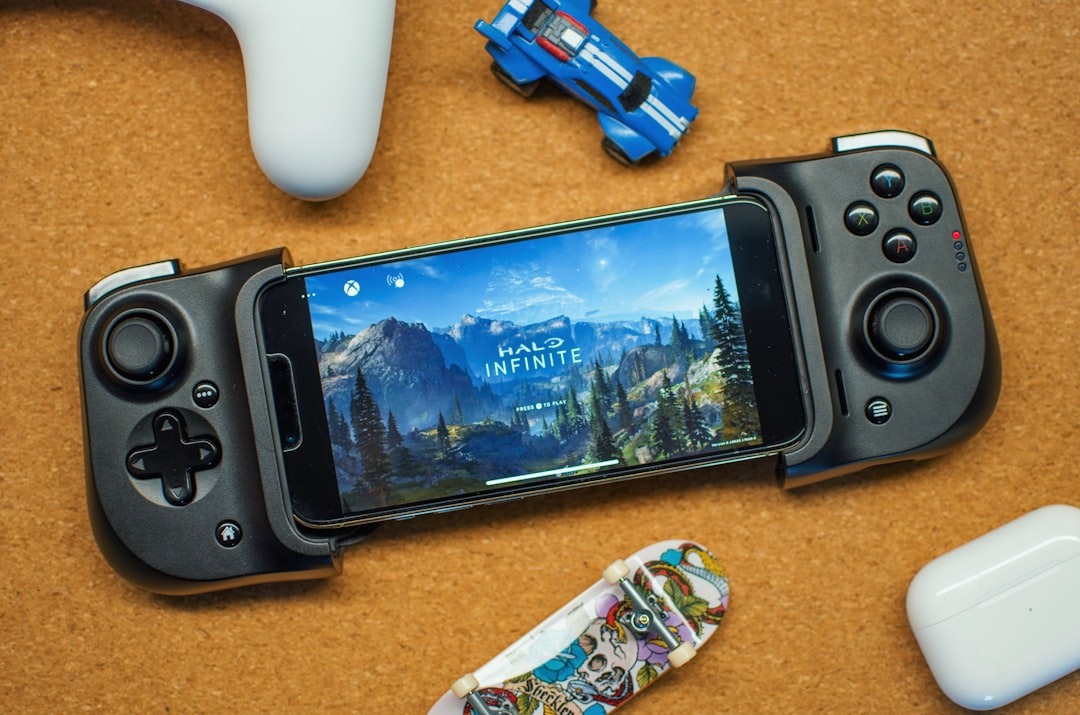
For decades, gaming followed a familiar ritual: buy expensive hardware, wait for long download times, then upgrade every few years when the next console arrived.
Cloud gaming quietly breaks that ritual.
Instead of pushing pixels from a box under the TV, cloud gaming streams entire games from remote servers—turning consoles into optional accessories rather than necessities. The shift feels subtle at first. Yet underneath, it challenges the very foundation of the gaming industry.
And the timing is no accident.
From Physical Power to Remote Performance
Traditional consoles built their dominance on one promise: raw, local power—faster GPUs, custom chips, and tightly optimised hardware created performance gaps that PCs struggled to match.
Cloud gaming flips that model.
Rather than upgrading devices, players now tap into data centres packed with enterprise-grade GPUs. The heavy lifting happens miles away. Screens display the result.
Services like NVIDIA GeForce NOW, Xbox Cloud Gaming, and Amazon Luna already demonstrate how high-end gaming can run on modest hardware (The Verge).
As we explored in How Big Tech Rose — and What Comes Next,
control over infrastructure often reshapes entire industries. Gaming is no exception.
Why Latency No Longer Kills the Experience
Latency once doomed cloud gaming attempts. Delays felt unforgivable in fast-paced games.
That constraint is fading.
Advances in edge computing, fibre networks, and adaptive streaming dramatically reduce lag. Meanwhile, predictive rendering and AI-based frame compensation smooth gameplay even under imperfect conditions.
The result isn’t flawless—but it’s good enough. And in technology, “good enough” often wins.
Netflix didn’t beat cable by matching broadcast quality overnight. It won by removing friction.
Accessibility Changes Everything
Consoles still demand upfront investment. Cloud gaming removes that barrier.
Players now launch AAA titles on phones, tablets, laptops, and smart TVs. Entry costs shrink. Discovery widens. Entire new markets open.
This mirrors broader trends discussed in Technology Is Changing the Global Economy in Unexpected Ways,
where access matters more than ownership.
For emerging markets, especially, cloud gaming may skip the console era entirely.
The Subscription Model Rewrites Value
Console gaming still revolves around individual purchases. Cloud gaming thrives on subscriptions.
Instead of owning discs or downloads, players access libraries—rotating, expanding, and constantly refreshed.
Xbox Game Pass exemplifies this shift. It conditions players to expect breadth over permanence and experimentation over commitment (IGN).
That change alters player behaviour:
- More sampling
- Less brand loyalty
- Faster trend cycles
In short, gaming starts to resemble streaming media.
Developers Feel the Pressure First
Cloud gaming doesn’t just change where games run—it changes how they’re built.
Developers gain:
- Scalable performance
- Reduced hardware fragmentation
- Faster iteration cycles
However, they also face platform dependency and revenue uncertainty—challenges we’ve seen before in mobile and streaming ecosystems.
This tension echoes themes from How Recommendation Algorithms Shape What We Watch,
where distribution power quietly shapes creative outcomes.
Why Consoles Aren’t Dead—Yet
Despite the disruption, consoles won’t vanish overnight.
They still offer:
- Guaranteed performance
- Offline play
- Deep ecosystem lock-in
- Cultural loyalty
Hardcore gamers value ownership and control. Competitive players demand minimal latency. Collectors still care about physical artefacts.
Cloud gaming challenges consoles—but doesn’t replace them outright.
At least not yet.
The Real Battle Is Platform Control
The future of gaming won’t hinge on hardware specs. It will hinge on who controls access.
Cloud platforms decide:
- Which games surface
- How revenue splits work
- Who reaches audiences first
That power mirrors shifts already visible across digital media ecosystems (MIT Technology Review).
Consoles once owned the living room.
Cloud gaming aims to own the connection.
Gaming Is Leaving the Box Behind
Cloud gaming doesn’t announce itself loudly. It slips into habits quietly—one streamed session at a time.
Players stop worrying about specs. Upgrades fade into the background. Hardware becomes incidental.
The question is no longer whether cloud gaming works.
It’s whether traditional consoles can remain central when computation lives elsewhere.
Gaming has always followed power.
Now, power lives in the cloud.
And once that shift completes, play will never feel anchored to a box again.

Latest from Our Blog
Discover a wealth of knowledge on software development, industry insights, and expert advice through our blog for an enriching experience.
-

Next-Gen Batteries and Energy Storage: The Technology Powering the Clean Energy Revolution
The global energy transition has a storage problem. Solar panels don’t produce electricity at night.…
-

AI in Climate Modelling and Mitigation: How Intelligent Systems Are Shaping Earth’s Future
Humanity’s climate challenge is vast and complex. Rising temperatures, changing weather patterns, biodiversity loss, and…
-

Clean Tech Investing in 2026: Where Capital Is Flowing and Why It Matters
Clean technology is no longer a cottage industry limited to niche sustainability funds or CSR…

Leave a Reply