
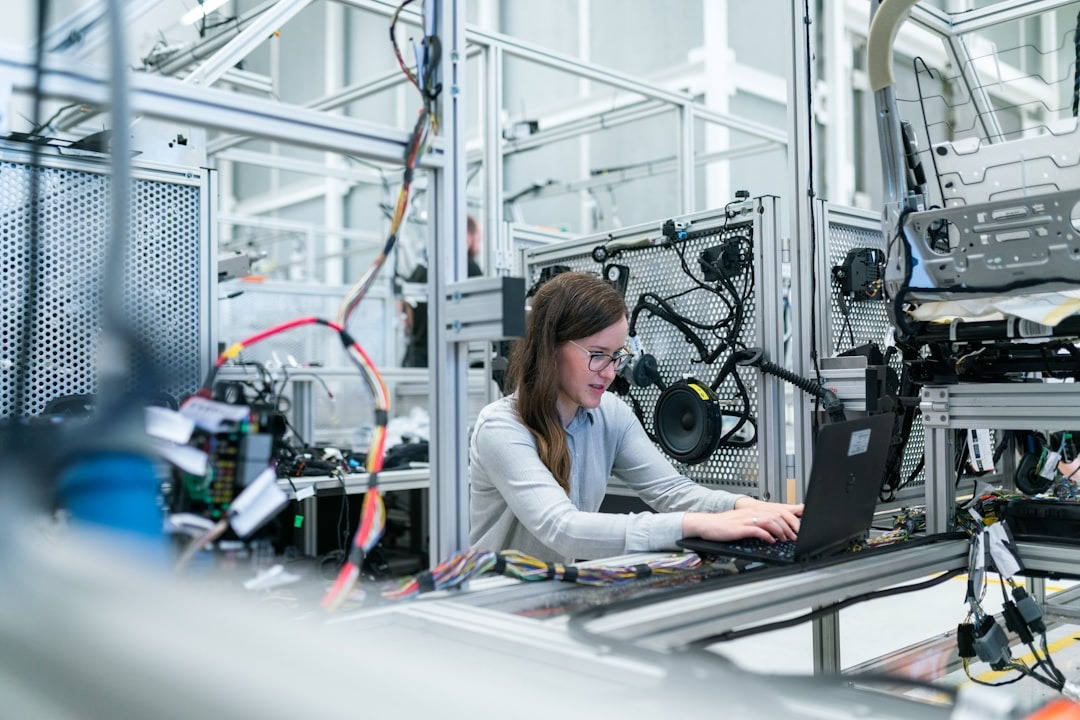
The next technological revolution will not be defined by a single invention.
Instead, it will come from the combination of several powerful technologies changing how people work, communicate, travel, and live.
Artificial intelligence is becoming more autonomous.
Robotics is becoming more intelligent.
Computing is becoming more powerful.
Meanwhile, industries are adopting digital systems that were once considered futuristic.
As 2030 approaches, the question is not whether technology will transform society.
The real question is:
Which technologies will create the biggest impact?
From AI-powered systems to quantum computing, these are 10 technologies that could reshape the world within the next few years.
Key Highlights
- AI could become the foundation of future digital experiences
- Quantum computing may redefine cybersecurity and research
- Robotics could transform industries and everyday life
- Biotechnology may change healthcare forever
- Emerging technologies are creating new economic opportunities
1. Artificial Intelligence and AI Agents
Artificial intelligence is already changing the technology landscape.
However, the next phase is much bigger than chatbots and recommendation systems.
The rise of AI agents could create software that understands goals, makes decisions, and completes tasks independently.
Instead of simply responding to commands, AI systems may actively assist users.
For example, an AI agent could:
- Manage business operations
- Analyse financial information
- Automate workflows
- Support customer service
This shift connects with the growing transformation of software itself.
Read our analysis:
As a result, AI may become the foundation layer of future computing.
2. Quantum Computing
Quantum computing represents a completely different approach to processing information.
Unlike traditional computers, quantum systems use quantum mechanics to solve specific problems at incredible speeds.
Potential applications include:
- Drug discovery
- Climate modelling
- Advanced simulations
- Cryptography
However, quantum computing also creates cybersecurity concerns.
Current encryption methods may eventually require upgrades.
Read our previous coverage:
Although large-scale quantum computing is still developing, its long-term impact could be enormous.
3. Digital Twins
A factory that predicts equipment failures.
A city that simulates traffic before making changes.
A hospital that models patient conditions.
These examples show the potential of digital twins.
Digital twins create virtual versions of physical systems using real-time data.
Consequently, organisations can test decisions before applying them in the real world.
Industries such as manufacturing, healthcare, and urban planning are already exploring this technology.
Read more:
4. Robotics and Autonomous Machines
Robots are moving beyond traditional factory environments.
Today, robotics is becoming more intelligent, flexible, and connected.
Future robots could support:
- Healthcare
- Manufacturing
- Logistics
- Agriculture
- Home assistance
Additionally, AI is making robots better at understanding environments and performing complex tasks.
As a result, robotics could become one of the defining technologies of the next decade.
5. Biotechnology and AI-Powered Healthcare
Healthcare is entering a new era.
Artificial intelligence, genetic research, and advanced biotechnology are changing how diseases are detected and treated.
Future breakthroughs may include:
- Personalized medicine
- AI-assisted diagnosis
- Gene therapies
- Advanced medical simulations
Furthermore, technology could allow doctors to create more personalised treatment strategies.
The result could be a healthcare system that focuses more on prevention rather than reaction.
6. Augmented Reality and Spatial Computing
The screen-based computing era may be changing.
Augmented reality and spatial computing aim to bring digital information into the physical world.
Instead of looking down at a device, users could interact with information around them.
Possible applications include:
- Education
- Remote work
- Gaming
- Engineering
- Healthcare
Companies such as Apple and Meta are investing heavily in this area.
Therefore, spatial computing could become the next major computing platform.
7. Blockchain and Real-World Asset Tokenisation
Blockchain technology is moving beyond cryptocurrencies.
One of the biggest emerging applications is tokenisation.
Real-world asset tokenisation allows physical assets such as property, financial instruments, and commodities to become digital assets on blockchain networks.
This could improve:
- Ownership transparency
- Market accessibility
- Transaction efficiency
Read our previous analysis:
Consequently, blockchain could become part of the future financial infrastructure.
8. Renewable Energy and Climate Technology
Technology will play a major role in addressing climate challenges.
Innovations in:
- Battery storage
- Renewable energy
- Carbon capture
- Smart grids
could transform how societies produce and consume energy.
Furthermore, artificial intelligence is helping optimise energy systems.
The future energy landscape will likely become smarter, cleaner, and more distributed.
9. Autonomous Transportation
Self-driving technology continues to develop.
Although fully autonomous vehicles still face challenges, progress is accelerating.
Future transportation could include:
- Autonomous cars
- Smart logistics networks
- AI-controlled traffic systems
- Drone delivery
As a result, transportation could become safer and more efficient.
10. Advanced Cybersecurity and Digital Identity
As technology becomes more connected, cybersecurity becomes more important.
Future security systems will rely on:
- AI-powered threat detection
- Passwordless authentication
- Digital identity protection
- Advanced encryption
The need for stronger security is increasing because attackers are also becoming more advanced.
Read our cybersecurity analysis:
Ultimately, trust will become one of the most valuable assets in the digital economy.
The Technologies That Will Define the Future
Although these technologies are different, they are becoming increasingly connected.
AI improves robotics.
Quantum computing influences security.
Digital twins depend on data.
Blockchain changes ownership.
Together, these technologies are creating a new digital ecosystem.
The future will not be shaped by one breakthrough.
Instead, it will be shaped by how these innovations work together.
Conclusion
The world of 2030 will likely look very different from today.
Technology will become more intelligent, more connected, and more integrated into everyday life.
Some innovations will succeed faster than others.
Some predictions will change.
However, one thing is certain:
The next decade will be defined by technologies that move beyond simple tools and become essential parts of how society operates.
The future is not waiting to arrive.
It is already being built.
Key Takeaways
- AI will influence almost every major industry
- Quantum computing could transform science and security
- Digital twins will improve decision-making
- Robotics will become more intelligent
- Blockchain applications are expanding beyond crypto
- Cybersecurity will become even more critical
📢 Join the Conversation
Which technology do you think will have the biggest impact by 2030?
Share your thoughts and follow TechBroNews for more technology insights. Read More

Blog
This section provides an overview of the blog, showcasing a variety of articles, insights, and resources to inform and inspire readers.
-

Blockchain and Digital Identity
Every day, people prove who they are online. They log into banking apps. They access…
-

Can Blockchain Secure Elections?
Every election depends on one essential principle: trust. Citizens must believe that every eligible vote…
-

How Governments Are Using Blockchain
Blockchain is gradually moving from cryptocurrency headlines into public administration. Around the world, governments are…

Leave a Reply