
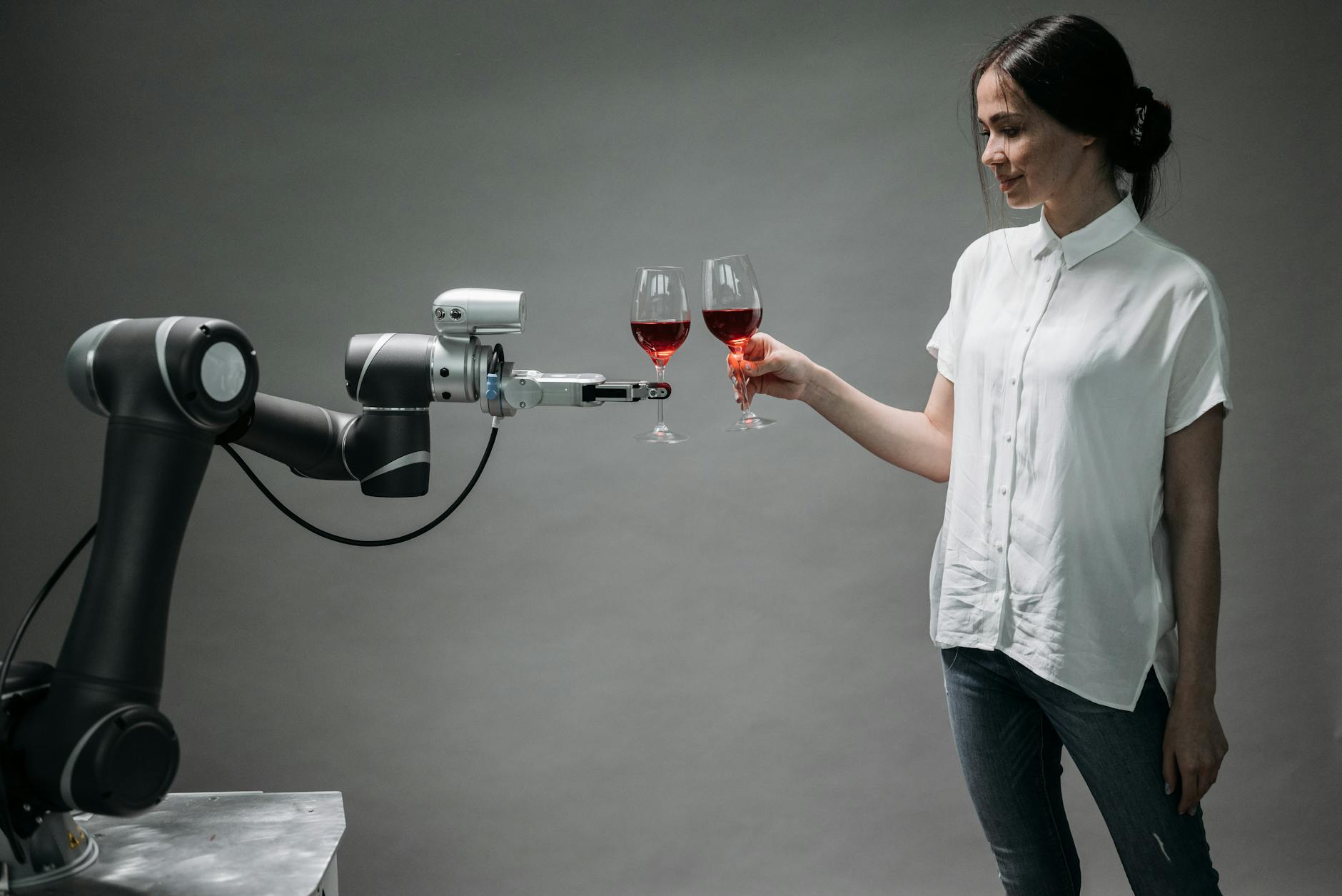
Artificial Intelligence has become the ultimate workplace Rorschach test. To some, it signals mass unemployment and economic upheaval. To others, it promises liberation from drudgery and a productivity renaissance. The truth, as usual, sits uncomfortably in between. AI won’t take all jobs—but it will permanently reshape what work looks like, how it’s valued, and who gets ahead.
The future of work isn’t about humans versus machines. It’s about how power, skills, and opportunity are redistributed when intelligence becomes cheap, scalable, and always on.
The Automation Panic—and Why It’s Incomplete
Every technological revolution arrives with job-loss anxiety. The steam engine, electricity, computers, and the internet all triggered fears of widespread unemployment. AI feels different only because it targets not just manual labour, but cognitive work once thought uniquely human.
And yes—some jobs will disappear.
Roles built around repetitive, rule-based tasks—data entry, basic bookkeeping, routine customer support—are already being automated. AI doesn’t get tired, doesn’t ask for raises, and scales instantly.
But history tells a more complex story: technology destroys tasks faster than it destroys work itself. Entire categories of employment fade, while new ones emerge—often in places no one predicted.
The real disruption isn’t job loss. It’s a job transformation.
From Job Titles to Task Bundles
One of the biggest misconceptions about AI is that it replaces entire professions. In practice, AI replaces specific tasks within jobs.
Take journalism, law, or software development:
- AI can draft articles—but not decide what matters.
- It can summarise contracts—but not negotiate nuance.
- It can generate code, but not own system architecture or accountability.
As a result, jobs are being unbundled and rebundled. Routine tasks fall to machines, while humans are pushed toward:
- Judgment
- Creativity
- Strategy
- Emotional intelligence
- Ethical responsibility
Work becomes less about execution—and more about decision-making.
The Rise of Augmented Workers
The biggest winners of the AI era won’t be machines. They’ll be humans who know how to work with machines.
AI acts as a force multiplier:
- A single designer can do the work of five.
- A solo developer can ship production-grade software.
- A marketer can test, iterate, and personalise campaigns at scale.
This creates a new divide—not between humans and AI, but between augmented workers and everyone else. Productivity gaps widen. Wages polarise. Those who adapt pull far ahead of those who don’t.
In this sense, AI doesn’t eliminate jobs—it raises the bar for keeping them.
Why “New Jobs” Isn’t the Full Answer
Optimists often argue that AI will create new roles: prompt engineers, AI auditors, model trainers, and ethics officers. That’s true—but incomplete.
The harder problem is transition. New jobs don’t automatically appear where old ones disappear. They require:
- Reskilling
- Time
- Access to education
- Economic support
Without deliberate policy and investment, AI risks accelerating inequality—rewarding those already positioned to adapt while leaving others behind.
The market alone won’t solve this. History suggests it never has.
Management, Metrics, and the Algorithmic Workplace
AI isn’t just changing what workers do—it’s changing how they’re measured.
Algorithmic management systems now:
- Track productivity in real time
- Predict burnout
- Optimize schedules
- Evaluate performance continuously
While this can improve efficiency, it also raises uncomfortable questions about surveillance, autonomy, and dignity at work. When productivity is constantly quantified, human judgment risks being reduced to a dashboard metric.
The future of work isn’t just about employment—it’s about power dynamics between workers, employers, and the systems in between.
Is This the End of Meaningful Work?
Paradoxically, AI may push humans toward more meaningful labour—if society chooses that path.
When machines handle routine tasks, humans can focus on:
- Care work
- Creative problem-solving
- Community building
- Leadership and mentorship
But this outcome isn’t automatic. Without intentional design, AI simply maximises efficiency—not fulfilment.
Technology is neutral about meaning. Humans aren’t. Read More
Conclusion: The Jobs Aren’t Gone—The Contract Is
AI won’t take all jobs. But it will rewrite the social contract around work.
Careers will be less linear. Skills will expire faster. Lifelong learning won’t be optional—it will be survival. The most stable asset won’t be a job title, but the ability to adapt.
The real question isn’t whether AI will change work.
It’s whether institutions—governments, companies, schools—will change fast enough to keep people from being crushed in the process.
Because in the age of artificial intelligence, the future of work isn’t predetermined.
It’s being negotiated—line by line, system by system, choice by choice. Read More

Leave a Reply